
Download print version:
On this page:
Acknowledgement of Country
We, the Department of Human Services (DHS), acknowledge and respect Aboriginal and Torres Strait Islander peoples as South Australia’s First Peoples and the Traditional Owners and occupants of the lands and waters of South Australia. We respect and celebrate the varied cultural and spiritual identities of all Aboriginal and Torres Strait Islander communities.
Aboriginal and Torres Strait Islander people have the right to live free from discrimination of any kind, and to exercise and enjoy their rights to family and culture in accordance with the principles of the United Nations Declaration on the Rights of Indigenous Peoples.
Our Plan artwork
This artwork was a collaboration between three young Aboriginal artists based in South Australia.
Kalli-Jade Wall was adopted at six weeks old. She grew up inspired by her Nana Mavis, an Arrernte woman who instilled pride in her Aboriginal heritage. Later, Kalli reconnected with her biological family and met her grandfather Joe, from the Jingili mob. Both shared stories of resilience and a deep love for culture, which she channels into her art.
Ashleigh Anne Bruza is a Wirangu and Kokatha woman who loves to create. She considers herself an emerging artist who has taken art more seriously in the last few years. Ashleigh is self-taught in canvas paintings, digital art, designing of logos, drawing, printmaking, jewellery making and mixed media art.
Tanaya Antony is a Narungga artist, born and living on Kaurna land (Adelaide). They have been painting and creating art most of their life. Their inspiration comes from growing up and working with their Nana to create soulful stories. They love painting with vibrant colour palettes and incorporating bold designs to tell their stories and celebrate and acknowledge Indigenous culture through their art. Tanaya is passionate about nature and wildlife and has a big interest in the ocean, which is why a lot of their artwork portrays and incorporates animal tracking and other elements of nature.
Engagement with the artists was facilitated by Ochre Dawn, a 100% Aboriginal owned and managed company that celebrates First Nations art, culture and heritage through various products and services. Ochre Dawn was also engaged to do the digital design and layout of our RAP.
Kalli-Jade Wall was adopted at six weeks old. She grew up inspired by her Nana Mavis, an Arrernte woman who instilled pride in her Aboriginal heritage. Later, Kalli reconnected with her biological family and met her grandfather Joe, from the Jingili mob. Both shared stories of resilience and a deep love for culture, which she channels into her art.
Ashleigh Anne Bruza is a Wirangu and Kokatha woman who loves to create. She considers herself an emerging artist who has taken art more seriously in the last few years. Ashleigh is self-taught in canvas paintings, digital art, designing of logos, drawing, printmaking, jewellery making and mixed media art.
Tanaya Antony is a Narungga artist, born and living on Kaurna land (Adelaide). They have been painting and creating art most of their life. Their inspiration comes from growing up and working with their Nana to create soulful stories. They love painting with vibrant colour palettes and incorporating bold designs to tell their stories and celebrate and acknowledge Indigenous culture through their art. Tanaya is passionate about nature and wildlife and has a big interest in the ocean, which is why a lot of their artwork portrays and incorporates animal tracking and other elements of nature.
Engagement with the artists was facilitated by Ochre Dawn, a 100% Aboriginal owned and managed company that celebrates First Nations art, culture and heritage through various products and services. Ochre Dawn was also engaged to do the digital design and layout of our RAP.

This artwork reflects the commitment of DHS to embrace multiculturalism and diversity. It supports new South Australians in becoming integral members of the community by providing assistance, grants, and volunteering opportunities to give back.
This piece serves as a celebration and a warm welcome, showcasing how our state thrives by appreciating various cultures and learning from one another. The diverse shades of handprints symbolise different skin tones and world map, representing the rich tapestry of races, cultures, and diversity present in South Australia.
The backdrop features wildflowers and vibrant colours, including warm oranges and other inviting hues, creating a welcoming atmosphere that highlights how DHS champions multiculturalism and ensures support for everyone in South Australia.
This artwork reflects the commitment of DHS to embrace multiculturalism and diversity. It supports new South Australians in becoming integral members of the community by providing assistance, grants, and volunteering opportunities to give back.
This piece serves as a celebration and a warm welcome, showcasing how our state thrives by appreciating various cultures and learning from one another. The diverse shades of handprints symbolise different skin tones and world map, representing the rich tapestry of races, cultures, and diversity present in South Australia.
The backdrop features wildflowers and vibrant colours, including warm oranges and other inviting hues, creating a welcoming atmosphere that highlights how DHS champions multiculturalism and ensures support for everyone in South Australia.

Having aged-care and disability as key areas where DHS offers support, I draw inspiration from my own family’s journey. My father, now an Elder, also lives with a disability. The artwork illustrates the path my family has travelled, along with the support network we have encountered throughout this journey. This piece holds particular significance as it stems from my personal experiences, and I believe many members of the First Nations community can resonate with the experience of caring for our elders and loved ones.
Having aged-care and disability as key areas where DHS offers support, I draw inspiration from my own family’s journey. My father, now an Elder, also lives with a disability. The artwork illustrates the path my family has travelled, along with the support network we have encountered throughout this journey. This piece holds particular significance as it stems from my personal experiences, and I believe many members of the First Nations community can resonate with the experience of caring for our elders and loved ones.
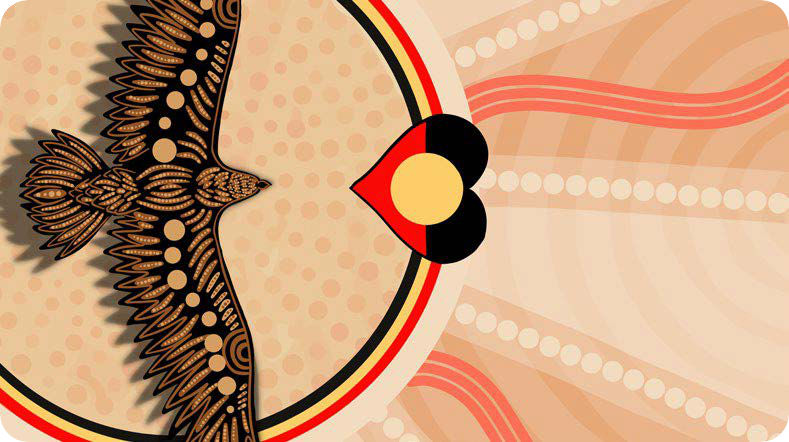
This piece features Bunjil the eagle, a powerful creator spirit who symbolises protection, strength, and guidance. His outstretched wings reflect the enduring presence and leadership of First Nations people across South Australia. The heart beside Bunjil represents love, unity and cultural pride, grounded in the colours of the Aboriginal flag. Radiating journey lines and dot work represent connection between communities, and the continuation of stories, culture and care across generations.
This piece honours the strength and survival of First Nations people and reflects the importance of culturally safe spaces within DHS – places where our people are respected, supported, and empowered.
This piece features Bunjil the eagle, a powerful creator spirit who symbolises protection, strength, and guidance. His outstretched wings reflect the enduring presence and leadership of First Nations people across South Australia. The heart beside Bunjil represents love, unity and cultural pride, grounded in the colours of the Aboriginal flag. Radiating journey lines and dot work represent connection between communities, and the continuation of stories, culture and care across generations.
This piece honours the strength and survival of First Nations people and reflects the importance of culturally safe spaces within DHS – places where our people are respected, supported, and empowered.
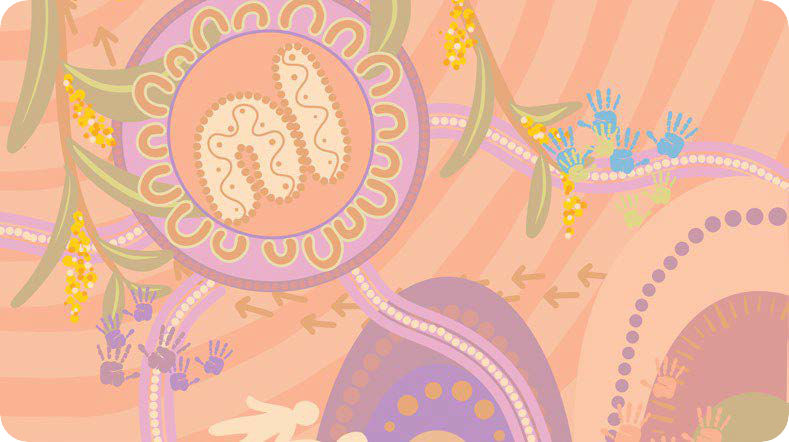
This piece honours the strength, resilience and determination of women—especially mothers—who navigate life’s challenges in order to support and protect their children.
As a proud Aboriginal woman, a mother of two, and a former Youth Worker with nearly 20 years’ experience in South Australia, I have witnessed the vital role women play in holding families and communities together.
The symbols represent the deep cultural responsibility women carry, and the way they draw on inner strength and community support—often turning to services like DHS—to create safer, stronger futures for their children.
This piece honours the strength, resilience and determination of women—especially mothers—who navigate life’s challenges in order to support and protect their children.
As a proud Aboriginal woman, a mother of two, and a former Youth Worker with nearly 20 years’ experience in South Australia, I have witnessed the vital role women play in holding families and communities together.
The symbols represent the deep cultural responsibility women carry, and the way they draw on inner strength and community support—often turning to services like DHS—to create safer, stronger futures for their children.

Youth artwork is about exploring the journey through a young person’s perspective. This piece explores the journey of adolescence, often a time of learning, uncertainty, self-discovery, and emotional turbulence, with the support of community connection, personal growth, and safe environments.
My personal experience is expressed here: when young people are embraced for who they are and given space to speak and be supported, in a safe environment, they grow to become the leaders, they get inspired and inspire others, helping build a more inclusive future.
Youth artwork is about exploring the journey through a young person’s perspective. This piece explores the journey of adolescence, often a time of learning, uncertainty, self-discovery, and emotional turbulence, with the support of community connection, personal growth, and safe environments.
My personal experience is expressed here: when young people are embraced for who they are and given space to speak and be supported, in a safe environment, they grow to become the leaders, they get inspired and inspire others, helping build a more inclusive future.

This piece is designed to be an uplifting artwork through the colours and love spread throughout. The piece honours the beauty and self-expression in the Queer community, encouraging LGBTIQA+ individuals in finding safety, support, and the freedom to express their true selves.
Created by a Queer person, this piece represents the personal and individual experience of someone in the LGBTIQA+ community, expressing how we should always be actively protected and empowered through community care and inclusive policies.
Emphasising that when Queer people are supported, seen, and heard, they can thrive, express themselves, and contribute meaningfully to the world around them.
This piece is designed to be an uplifting artwork through the colours and love spread throughout. The piece honours the beauty and self-expression in the Queer community, encouraging LGBTIQA+ individuals in finding safety, support, and the freedom to express their true selves.
Created by a Queer person, this piece represents the personal and individual experience of someone in the LGBTIQA+ community, expressing how we should always be actively protected and empowered through community care and inclusive policies.
Emphasising that when Queer people are supported, seen, and heard, they can thrive, express themselves, and contribute meaningfully to the world around them.
Message from the Chief Executive, DHS
Reconciliation is a shared responsibility. It is woven into our everyday work, and is a core organisational value at DHS, guiding our strategies, programs and services.
We see Reconciliation in action when staff, people who use our services, and our sector partners regularly come together to recognise and celebrate Aboriginal and Torres Strait Islander cultures, wisdom and achievements.
Reconciliation becomes transformational when we go beyond past efforts, deepening our reflection, evolving our practices, and embedding truth-telling about our shared histories.
Our Reconciliation Action Plan (RAP) provides a roadmap for the meaningful action we can take within our organisation, our clients and customers and our communities to advance Reconciliation. While this RAP is dynamic, it is not a standalone document. This RAP is strategically aligned to our Closing the Gap Transformation and Aboriginal Workforce Strategy.
For those of us striving to be allies, there are many ways we can genuinely contribute to Reconciliation. Anyone at any level across the organisation can be a leader in Reconciliation. Let’s show vulnerability, be proud of our Reconciliation journey and importantly, hold ourselves accountable to advancing Reconciliation.
I invite you to join me in making a transformational commitment to Reconciliation under our RAP, one where we work collaboratively toward a shared future, with meaningful impact and lasting change.
Sandy Pitcher (she/her)
Chief Executive
Department of Human Services
Message from the Chief Executive Officer, Reconciliation Australia
Reconciliation Australia commends the Department of Human Services (DHS) on the formal endorsement of its fourth Innovate Reconciliation Action Plan (RAP).
Since 2006, RAPs have provided a framework for organisations to leverage their structures and diverse spheres of influence to support the national Reconciliation movement.
With over 5.5 million people now either working or studying in an organisation with a RAP, the program’s potential for impact is greater than ever. DHS continues to be part of a strong network of more than 3,000 corporate, government, and not-for-profit organisations that have taken goodwill and transformed it into action.
The four RAP types — Reflect, Innovate, Stretch and Elevate — allow RAP partners to continuously strengthen Reconciliation commitments and constantly strive to apply learnings in new ways.
An Innovate RAP is a crucial and rewarding period in an organisation’s Reconciliation journey. It is a time to build the strong foundations and relationships that ensure sustainable, thoughtful, and impactful RAP outcomes into the future.
An integral part of building these foundations is reflecting on and cataloguing the successes and challenges of previous RAPs. Learnings gained through effort and innovation are invaluable resources that DHS will continuously draw upon to create RAP commitments rooted in experience and maturity.
These learnings extend to DHS using the lens of Reconciliation to better understand its core business, sphere of influence, and diverse community of staff and stakeholders.
The RAP program’s emphasis on relationships, respect, and opportunities gives organisations a framework from which to foster connections with Aboriginal and Torres Strait Islander peoples rooted in mutual collaboration and trust.
This Innovate RAP is an opportunity for DHS to strengthen these relationships, gain crucial experience, and nurture connections that will become the lifeblood of its future RAP commitments. By enabling and empowering staff to contribute to this process, DHS will ensure shared and cooperative success in the long-term.
Gaining experience and reflecting on pertinent learnings will ensure the sustainability of DHS’ future RAPs and Reconciliation initiatives, providing meaningful impact toward Australia’s Reconciliation journey.
Congratulations DHS on your fourth Innovate RAP and I look forward to following your ongoing Reconciliation journey.
Karen Mundine
Chief Executive Officer
Reconciliation Australia
Our vision for Reconciliation
At DHS, Reconciliation is not confined to a moment, it is lived all year round. Truth-telling is embraced, and the histories and lived experiences of Aboriginal and Torres Strait Islander peoples are honoured every day.
We are a culturally safe organisation, where allyship is active, accountable, and enduring. Aboriginal and Torres Strait Islander peoples are empowered in their self-determination, leading decisions that shape their lives and communities.
Through sustained leadership, deep listening, and strong relationships, we work toward equity, where systems are fair, opportunities are shared, and outcomes are just. Reconciliation is woven into our culture, our actions, and our impact, today, tomorrow, and always.
Our business
About the Department of Human Services (DHS)
DHS is a South Australian Government agency committed to supporting the wellbeing, safety, and inclusion of all South Australians. We deliver and commission a broad range of programs and services that empower individuals, strengthen communities, and promote equity across the state.
Our vision
A future of equity, wellbeing and quality of life for all South Australians.
Our purpose
We partner with people, communities and organisations to empower and build the capability and capacity of South Australians, challenging systems to address disadvantage and exclusion.
DHS provides and commissions services across metropolitan, regional, and remote South Australia. These include:
- Aboriginal youth and family services
- Adult Safeguarding Unit
- Ageing Well
- Child and Family Support
- Community Connections
- Concessions SA
- Disability Services
- Exceptional Needs Unit
- Gambling Harm Support
- Homelessness
- LGBTIQA+ inclusion services
- Metropolitan Aboriginal Youth and Family Services
- Prevention of Domestic, Family and Sexual Violence
- Screening Unit
- Volunteering
- Women’s Information Service
- Youth Justice
- Youth services.
We also support community-led initiatives through targeted grant programs such as Grants SA, enabling grassroots organisations to respond to local needs.
DHS’ geographical footprint stretches across metropolitan, regional and remote South Australia.
DHS provides and commissions services across metropolitan, regional, and remote South Australia. These include:
- Aboriginal youth and family services
- Adult Safeguarding Unit
- Ageing Well
- Child and Family Support
- Community Connections
- Concessions SA
- Disability Services
- Exceptional Needs Unit
- Gambling Harm Support
- Homelessness
- LGBTIQA+ inclusion services
- Metropolitan Aboriginal Youth and Family Services
- Prevention of Domestic, Family and Sexual Violence
- Screening Unit
- Volunteering
- Women’s Information Service
- Youth Justice
- Youth services.
We also support community-led initiatives through targeted grant programs such as Grants SA, enabling grassroots organisations to respond to local needs.
DHS’ geographical footprint stretches across metropolitan, regional and remote South Australia.
DHS operates within a robust legislative environment that guides our service delivery, policy development, and community engagement. Key frameworks include:
Disability Inclusion Act 2018 (SA)
Promotes access, inclusion, and rights for people with disability.
Children and Young People (Safety) Act 2017 (SA)
Guides child protection and wellbeing.
Youth Justice Administration Act 2016 (SA)
Regulates youth justice systems and services.
Equal Opportunity Act 1984 (SA)
Supports anti-discrimination and equity.
Public Sector Act 2009 (SA)
Governs employment and conduct of public servants.
Domestic Violence Act 2021 (SA)
Strengthens protections for victim-survivors.
Aboriginal Heritage Act 1988 (SA)
Protects Aboriginal cultural heritage and sites.
Volunteer Protection Act 2001
Provides protection for volunteers acting in good faith.
Carers Recognition Act 2005
Recognises the role of carers and sets obligations to consider their needs.
DHS operates within a robust legislative environment that guides our service delivery, policy development, and community engagement. Key frameworks include:
Disability Inclusion Act 2018 (SA)
Promotes access, inclusion, and rights for people with disability.
Children and Young People (Safety) Act 2017 (SA)
Guides child protection and wellbeing.
Youth Justice Administration Act 2016 (SA)
Regulates youth justice systems and services.
Equal Opportunity Act 1984 (SA)
Supports anti-discrimination and equity.
Public Sector Act 2009 (SA)
Governs employment and conduct of public servants.
Domestic Violence Act 2021 (SA)
Strengthens protections for victim-survivors.
Aboriginal Heritage Act 1988 (SA)
Protects Aboriginal cultural heritage and sites.
Volunteer Protection Act 2001
Provides protection for volunteers acting in good faith.
Carers Recognition Act 2005
Recognises the role of carers and sets obligations to consider their needs.
At DHS, we embrace the public sector values of:
- Service
- Professionalism
- Trust
- Respect
- Collaboration and engagement
- Honesty and integrity
- Courage and tenacity
- Sustainability.
At DHS, we embrace the public sector values of:
- Service
- Professionalism
- Trust
- Respect
- Collaboration and engagement
- Honesty and integrity
- Courage and tenacity
- Sustainability.
Our workforce and commitment to inclusion
As of 30 June 2025, DHS employed 3,286 staff, including 138 employees (4.2%) who identify as Aboriginal and/or Torres Strait Islander people. This representation reflects our commitment to Reconciliation, cultural safety, and inclusive employment practices.
Our role in Reconciliation
As a state government department, DHS holds a unique position of influence, shaping policies, regulating systems, and delivering services that impact the full spectrum of community life. Through our RAP, we affirm that Reconciliation is lived all year round. We are committed to truth-telling, allyship, cultural safety, self-determination, and equity, not just in principle, but in practice.
Our Reconciliation Action Plan
DHS is embarking on a Reconciliation Action Plan to embed truth-telling, allyship, cultural safety, self-determination, and equity into every aspect of our work. This Plan ensures Reconciliation is not just an aspiration, but a lived practice that is accountable, measurable and central to the wellbeing of all South Australians.
Our Reconciliation journey began more than 10 years ago with the department’s last Innovate Reconciliation Action Plan (RAP) expiring in 2024.
We are committed to ensuring that the voices, aspirations and needs of Aboriginal and Torres Strait Islander peoples are reflected in this Innovate Reconciliation Action Plan (RAP) and we will work in partnership with Aboriginal and Torres Strait Islander peoples to develop, monitor and evaluate deliverable actions.
There were many valuable lessons from the implementation of our last RAP including progress in recognising opportunities such as National Reconciliation Week and NAIDOC Week. We advanced the use of Kaurna language in everyday settings and progressed our Aboriginal Cultural Footprint (cultural awareness) training.
From our previous Reconciliation Action Plan, DHS learned that Reconciliation must be embedded into everyday practice, not treated as a symbolic or time-bound initiative. While we made progress in raising awareness and building relationships, we recognised that true cultural safety requires ongoing investment, Aboriginal leadership, and co-designed systems. We saw that allyship must be active and visible, and that truth-telling needs structured, trauma-informed support to be meaningful.
Importantly, we learned that self-determination cannot be achieved through consultation alone, it demands genuine power-sharing and respect for Aboriginal and Torres Strait Islander governance. A review of our previous RAP conducted in 2024 noted that while progress was made, not all commitments were delivered. The review recommended securing ongoing resources for the management and monitoring of the RAP (which has now been achieved). These lessons have shaped our renewed commitment to a RAP that is accountable, enduring, and transformative.
In pursuing our Innovate RAP 2026–2028, DHS will ensure alignment with the following strategic initiatives:
- South Australia’s Implementation Plan for Closing the Gap
- The South Australian Public Sector Anti-Racism Strategy 2023–2028
- DHS’ Aboriginal Workforce Strategy 2026–2031
- DHS’ Closing the Gap Framework and Policy.
We recognise the importance of Aboriginal and Torres Strait Islander leadership and self-determination and acknowledge the need to de-colonise traditional government approaches to seek real change. DHS is committed to working together with Aboriginal and Torres Strait Islander peoples through these strategic approaches in a genuine spirit of partnership and co-design.
We began the development of this RAP by listening deeply to our Aboriginal staff, beginning with an Aboriginal and Torres Strait Islander staff forum where participants were able to speak freely in a culturally safe environment. We acknowledged the impact of the 2023 Voice to Parliament referendum and discussed what Aboriginal and Torres Strait Islander staff need in the workplace to support their cultural safety and their expectations of DHS’ Reconciliation efforts moving forward. Through these conversations, we heard a commitment to continuing this journey and a strong need to amplify our actions.
In the development of our RAP, DHS partnered with external Aboriginal consultant, Kimberley Wanganeen, to undertake a comprehensive consultation process. This included a survey, a series of discussions and workshops with the DHS Executive Leadership Team, key staff, the Aboriginal Leadership Group (which comprises eight members) and the Nunga Network – DHS’ internal network of 133 Aboriginal staff.
Our RAP artwork has been created by Aboriginal artists, and the design and final publishing of our RAP has been led by Ochre Dawn – a 100% Aboriginal owned and operated South Australian business.
As we have demonstrated in the development of our RAP, working in partnership alongside Aboriginal colleagues and professionals in their fields, DHS seeks to lead the way in advancing Reconciliation. We intend to deliver this RAP how we started, by recognising the strength, resilience and cultural wisdom of Aboriginal and Torres Strait Islander people and ensuring that we are active in supporting self-determination and cultural safety at all times.
Governance
DHS’ Aboriginal Outcomes Executive Committee (AOEC) will function as the DHS Reconciliation Working Group. Members of this Committee are our RAP champions, providing an important across-departmental governance role, as well as monitoring implementation and reporting on the progress of our RAP.
The AOEC is a newly established Committee that has responsibility for providing departmental consistency, transparency and accountability by monitoring the implementation and performance of strategies, initiatives and policies designed to improve Aboriginal and Torres Strait Islander outcomes, including:
- Deliverables under the National Agreement on Closing the Gap
- DHS Reconciliation Action Plan
- DHS Aboriginal Workforce Strategy
- Agreed departmental Aboriginal outcome priorities. Priorities may include, but are not limited to:
- Anti-Racism Strategy and Action Plan
- Indigenous Data Sovereignty
- Economic Participation
- Local decision-making
- Place-based partnerships
- Aboriginal cultural governance.
The Committee includes membership from Aboriginal and non-Indigenous staff, including:
- Director, Closing the Gap Policy and Transformation (joint chairperson)
- Director, Aboriginal Practice and Partnerships (joint chairperson)
- Director, Office of the Chief Executive and Governance
- Chief Procurement Officer, Procurement and Quality Assurance
- Aboriginal Cultural Consultant, Safer Family Services
- First Nations Principal Policy Officer, Office for Women
- Accommodation Services Manager, Youth Justice and Exceptional Needs Unit
- Senior Aboriginal Policy and Projects Officer
- Director, Community and Partnerships
- Principal Advisor, Office of the Chief Executive and Governance
- Principal Project Officer – Reconciliation
- Executive Director, Child and Family Support
- Director, Inclusion Policy and Reform
- Principal Aboriginal Workforce Consultant
- The Executive Director of Child and Family Support is the Executive Sponsor of this RAP.
The RAP will also be championed by our Chief Executive, Executive Leadership Team (including Deputy Chief Executive and Executive Directors), Aboriginal Leadership Group and the Senior Executive Council. The Nunga Network was given opportunities to be involved in the development of the RAP and will continue to contribute to its implementation as a key Aboriginal staff advisory and representative group in DHS.
Relationships
Focus area: A cultural audit of DHS’ policies, practices and organisational culture will provide integral insights toward advancing deliverables under the Relationships pillar.
We are committed to a shared understanding of each other’s experiences and cultures, to recognise and respect the cultural authority of colleagues and community members, and to provide the highest quality of services aligned with appropriate need.
Our hearts and minds are open to learning from Aboriginal peoples’ knowledge, perspectives, and leadership, strengthening co-design and sharing power in planning and delivery of programs and responses.
Formal partnerships and shared decision-making are a Priority 1 Reform area as part of the National Agreement on Closing the Gap. This includes building and strengthening structures to ensure the full involvement of Aboriginal and Torres Strait Islander people.
1.1 Develop and implement an engagement plan for working with Aboriginal and Torres Strait Islander stakeholders and organisations including guiding principles and a co-design approach.
Timeline
December 2026
Responsibility lead
Aboriginal Outcomes Executive Committee (Co-Chair/s)
Responsibility support
Executive Leadership Team (Director, Office of the Chief Executive)
Social Policy, Evaluation and Reform (Reconciliation Officer)
1.2 Promote awareness about SA First Nations Voice to Parliament.
Timeline
April 2026
Responsibility lead
Office of the Chief Executive (Director)
Responsibility support
Social Policy, Evaluation and Reform (Reconciliation Officer)
1.1 Develop and implement an engagement plan for working with Aboriginal and Torres Strait Islander stakeholders and organisations including guiding principles and a co-design approach.
Timeline
December 2026
Responsibility lead
Aboriginal Outcomes Executive Committee (Co-Chair/s)
Responsibility support
Executive Leadership Team (Director, Office of the Chief Executive)
Social Policy, Evaluation and Reform (Reconciliation Officer)
1.2 Promote awareness about SA First Nations Voice to Parliament.
Timeline
April 2026
Responsibility lead
Office of the Chief Executive (Director)
Responsibility support
Social Policy, Evaluation and Reform (Reconciliation Officer)
2.1 Develop and implement a RAP Communications Plan that includes NRW celebrations.
Timeline
NRW: 27 May–3 June 2026 and 2027
Responsibility lead
Social Policy, Evaluation and Reform (Reconciliation Officer)
Responsibility support
Communications and Engagement (Director)
Aboriginal Outcomes Executive Committee (Co-Chairs)
2.1.1 Promote Reconciliation Australia’s NRW resources and materials to staff.
Timeline
April 2026 and April 2027
Responsibility lead
Social Policy, Evaluation and Reform (Reconciliation Officer)
Responsibility support
Communications and Engagement (Director)
Aboriginal Outcomes Executive Committee (Co-Chairs)
2.1.2 RAP Working Group members (or equivalent) participate in at least one external NRW event.
Timeline
March 2026 and March 2027
Responsibility lead
Social Policy, Evaluation and Reform (Reconciliation Officer)
Responsibility support
Communications and Engagement (Director)
Aboriginal Outcomes Executive Committee (Co-Chairs)
2.1.3 Encourage and support staff (including senior leaders) to participate in at least one external NRW event each year.
Timeline
March 2026 and March 2027
Responsibility lead
Social Policy, Evaluation and Reform (Reconciliation Officer)
Responsibility support
Communications and Engagement (Director)
Aboriginal Outcomes Executive Committee (Co-Chairs)
2.1.4 Organise at least one NRW event each year.
Timeline
March 2026 and March 2027
Responsibility lead
Social Policy, Evaluation and Reform (Reconciliation Officer)
Responsibility support
Communications and Engagement (Director)
Aboriginal Outcomes Executive Committee (Co-Chairs)
2.1.5 Register DHS NRW events on Reconciliation Australia’s NRW website.
Timeline
September 2026 and September 2027
Responsibility lead
Social Policy, Evaluation and Reform (Reconciliation Officer)
Responsibility support
Communications and Engagement (Director)
Aboriginal Outcomes Executive Committee (Co-Chairs)
2.2 Update DHS Executive Leadership Statement of Reconciliation, and distribute posters across DHS sites.
Timeline
December 2026
Responsibility lead
Social Policy, Evaluation and Reform (Reconciliation Officer)
Responsibility support
Executive Leadership Team (Director, Office of the Chief Executive)
2.3 Communicate our commitment to Reconciliation publicly.
Timeline
February 2027
Responsibility lead
Communications and Engagement (Director)
Responsibility support
Social Policy, Evaluation and Reform (Reconciliation Officer)
2.1 Develop and implement a RAP Communications Plan that includes NRW celebrations.
Timeline
NRW: 27 May–3 June 2026 and 2027
Responsibility lead
Social Policy, Evaluation and Reform (Reconciliation Officer)
Responsibility support
Communications and Engagement (Director)
Aboriginal Outcomes Executive Committee (Co-Chairs)
2.1.1 Promote Reconciliation Australia’s NRW resources and materials to staff.
Timeline
April 2026 and April 2027
Responsibility lead
Social Policy, Evaluation and Reform (Reconciliation Officer)
Responsibility support
Communications and Engagement (Director)
Aboriginal Outcomes Executive Committee (Co-Chairs)
2.1.2 RAP Working Group members (or equivalent) participate in at least one external NRW event.
Timeline
March 2026 and March 2027
Responsibility lead
Social Policy, Evaluation and Reform (Reconciliation Officer)
Responsibility support
Communications and Engagement (Director)
Aboriginal Outcomes Executive Committee (Co-Chairs)
2.1.3 Encourage and support staff (including senior leaders) to participate in at least one external NRW event each year.
Timeline
March 2026 and March 2027
Responsibility lead
Social Policy, Evaluation and Reform (Reconciliation Officer)
Responsibility support
Communications and Engagement (Director)
Aboriginal Outcomes Executive Committee (Co-Chairs)
2.1.4 Organise at least one NRW event each year.
Timeline
March 2026 and March 2027
Responsibility lead
Social Policy, Evaluation and Reform (Reconciliation Officer)
Responsibility support
Communications and Engagement (Director)
Aboriginal Outcomes Executive Committee (Co-Chairs)
2.1.5 Register DHS NRW events on Reconciliation Australia’s NRW website.
Timeline
September 2026 and September 2027
Responsibility lead
Social Policy, Evaluation and Reform (Reconciliation Officer)
Responsibility support
Communications and Engagement (Director)
Aboriginal Outcomes Executive Committee (Co-Chairs)
2.2 Update DHS Executive Leadership Statement of Reconciliation, and distribute posters across DHS sites.
Timeline
December 2026
Responsibility lead
Social Policy, Evaluation and Reform (Reconciliation Officer)
Responsibility support
Executive Leadership Team (Director, Office of the Chief Executive)
2.3 Communicate our commitment to Reconciliation publicly.
Timeline
February 2027
Responsibility lead
Communications and Engagement (Director)
Responsibility support
Social Policy, Evaluation and Reform (Reconciliation Officer)
3.1 Develop and implement a staff engagement strategy to increase awareness of Reconciliation across our workforce.
Timeline
December 2026
Responsibility lead
Social Policy, Evaluation and Reform (Reconciliation Officer)
Responsibility support
Communications and Engagement (Director)
Aboriginal Outcomes Executive Committee (Co-Chair/s)
3.2 Identify and implement opportunities to influence external stakeholders in Reconciliation efforts, including collaboration with RAP organisations and other stakeholders.
Timeline
May 2026 and May 2027
Responsibility lead
Social Policy, Evaluation and Reform (Reconciliation Officer)
Responsibility support
Communications and Engagement (Director)
Aboriginal Outcomes Executive Committee (Co-Chair/s)
3.1 Develop and implement a staff engagement strategy to increase awareness of Reconciliation across our workforce.
Timeline
December 2026
Responsibility lead
Social Policy, Evaluation and Reform (Reconciliation Officer)
Responsibility support
Communications and Engagement (Director)
Aboriginal Outcomes Executive Committee (Co-Chair/s)
3.2 Identify and implement opportunities to influence external stakeholders in Reconciliation efforts, including collaboration with RAP organisations and other stakeholders.
Timeline
May 2026 and May 2027
Responsibility lead
Social Policy, Evaluation and Reform (Reconciliation Officer)
Responsibility support
Communications and Engagement (Director)
Aboriginal Outcomes Executive Committee (Co-Chair/s)
4.1 Align with the South Australian strategic directives, including the Public Sector’s Anti-Racism Strategy.
Timeline
August 2027
Responsibility lead
Social Policy, Evaluation and Reform (Director)
Responsibility support
Aboriginal Outcomes Executive Committee (Co-Chair/s)
Organisational Development and Learning (Director)
4.1.1 A review of HR policies and procedures to identify existing anti-discrimination provisions, and future needs.
Timeline
August 2027
Responsibility lead
People and Culture (Director)
Responsibility support
Aboriginal Outcomes Executive Committee (Co-Chair/s)
Organisational Development and Learning (Director)
4.1.2 Develop, implement, and communicate an anti-discrimination policy for our organisation.
Timeline
September 2027
Responsibility lead
Social Policy, Evaluation and Reform (Director)
Responsibility support
Aboriginal Outcomes Executive Committee (Co-Chair/s)
Organisational Development and Learning (Director)
4.1.3 Engage with Aboriginal and Torres Strait Islander staff and/or Aboriginal and Torres Strait Islander advisors to consult on our anti-discrimination policy.
Timeline
August 2027
Responsibility lead
Social Policy, Evaluation and Reform (Reconciliation Officer)
Responsibility support
Aboriginal Outcomes Executive Committee (Co-Chair/s)
Organisational Development and Learning (Director)
4.1.4 Educate senior leaders on the effects of racism.
Timeline
December 2026
Responsibility lead
Social Policy, Evaluation and Reform (Reconciliation Officer)
Responsibility support
Aboriginal Outcomes Executive Committee (Co-Chair/s)
Organisational Development and Learning (Director)
4.1 Align with the South Australian strategic directives, including the Public Sector’s Anti-Racism Strategy.
Timeline
August 2027
Responsibility lead
Social Policy, Evaluation and Reform (Director)
Responsibility support
Aboriginal Outcomes Executive Committee (Co-Chair/s)
Organisational Development and Learning (Director)
4.1.1 A review of HR policies and procedures to identify existing anti-discrimination provisions, and future needs.
Timeline
August 2027
Responsibility lead
People and Culture (Director)
Responsibility support
Aboriginal Outcomes Executive Committee (Co-Chair/s)
Organisational Development and Learning (Director)
4.1.2 Develop, implement, and communicate an anti-discrimination policy for our organisation.
Timeline
September 2027
Responsibility lead
Social Policy, Evaluation and Reform (Director)
Responsibility support
Aboriginal Outcomes Executive Committee (Co-Chair/s)
Organisational Development and Learning (Director)
4.1.3 Engage with Aboriginal and Torres Strait Islander staff and/or Aboriginal and Torres Strait Islander advisors to consult on our anti-discrimination policy.
Timeline
August 2027
Responsibility lead
Social Policy, Evaluation and Reform (Reconciliation Officer)
Responsibility support
Aboriginal Outcomes Executive Committee (Co-Chair/s)
Organisational Development and Learning (Director)
4.1.4 Educate senior leaders on the effects of racism.
Timeline
December 2026
Responsibility lead
Social Policy, Evaluation and Reform (Reconciliation Officer)
Responsibility support
Aboriginal Outcomes Executive Committee (Co-Chair/s)
Organisational Development and Learning (Director)
5.1 Participation in an Aboriginal Community-Controlled Organisations (ACCO) Exchange Program.
Timeline
August 2026 and 2027
Responsibility lead
Organisational Development and Learning (Director)
Responsibility support
People and Partnerships (Director)
5.2 Participation of non-Aboriginal staff in the Jawun Secondment Program.
Timeline
August 2026 and 2027
Responsibility lead
Organisational Development and Learning (Director)
Responsibility support
People and Partnerships (Director)
5.3 Participation of executive staff in the Jawun Executive Visit Program.
Timeline
August 2026 and 2027
Responsibility lead
Organisational Development and Learning (Director)
Responsibility support
People and Partnerships (Director)
5.1 Participation in an Aboriginal Community-Controlled Organisations (ACCO) Exchange Program.
Timeline
August 2026 and 2027
Responsibility lead
Organisational Development and Learning (Director)
Responsibility support
People and Partnerships (Director)
5.2 Participation of non-Aboriginal staff in the Jawun Secondment Program.
Timeline
August 2026 and 2027
Responsibility lead
Organisational Development and Learning (Director)
Responsibility support
People and Partnerships (Director)
5.3 Participation of executive staff in the Jawun Executive Visit Program.
Timeline
August 2026 and 2027
Responsibility lead
Organisational Development and Learning (Director)
Responsibility support
People and Partnerships (Director)
Respect
Focus area: Reviewing and ensuring delivery of a cultural learning strategy will be critical to DHS in progressing our Reconciliation path.
Respect for Aboriginal and Torres Strait Islander peoples, cultures, lands and waters, histories and knowledge are essential foundations to our department’s continual growth and Reconciliation journey.
DHS is determined to continuously build our cultural responsiveness, refine our programs to better serve our communities, and deepen the respect we have for DHS Aboriginal and Torres Strait Islander colleagues and community members through learning and active engagement. This can look like joining in celebrations such as NAIDOC Week, or it can also be deliberately leaning into truth-telling.
DHS is unwavering in our commitment to ensuring that Aboriginal peoples who access our services are acknowledged, treated with respect, and receive services that are appropriate to their spiritual, cultural and personal needs.
By embedding respect into all that we do, it actively contributes toward Priority Reform 3’s priorities, for example, ‘embed meaningful cultural safety, support Aboriginal cultures, and improve engagement with Aboriginal people’.
6.1 Develop a DHS cultural learning approach.
Timeline
December 2026
Responsibility lead
Organisational Development and Learning (Director)
Responsibility support
People and Partnerships (Director)
Aboriginal Outcomes Executive Committee (Co-Chair/s)
6.1.1 Conduct a review of cultural learning needs within our organisation.
Timeline
January 2026
Responsibility lead
Organisational Development and Learning (Director)
Responsibility support
People and Partnerships (Director)
Aboriginal Outcomes Executive Committee (Co-Chair/s)
6.1.2 Consult local Traditional Owners and/or Aboriginal advisors, and DHS Aboriginal staff to inform our cultural learning strategy.
Timeline
July 2026
Responsibility lead
Organisational Development and Learning (Director)
Responsibility support
People and Partnerships (Director)
Aboriginal Outcomes Executive Committee (Co-Chair/s)
6.1.3 Develop, implement, and communicate the cultural learning approach to DHS staff.
Timeline
December 2026
Responsibility lead
Organisational Development and Learning (Director)
Responsibility support
People and Partnerships (Director)
Aboriginal Outcomes Executive Committee (Co-Chair/s)
6.1.4 Provide opportunities for RAP Working Group members, HR managers and other key leadership staff to participate in formal and structured cultural learning.
Timeline
December 2026
Responsibility lead
Organisational Development and Learning (Director)
Responsibility support
People and Partnerships (Director)
Aboriginal Outcomes Executive Committee (Co-Chair/s)
6.1 Develop a DHS cultural learning approach.
Timeline
December 2026
Responsibility lead
Organisational Development and Learning (Director)
Responsibility support
People and Partnerships (Director)
Aboriginal Outcomes Executive Committee (Co-Chair/s)
6.1.1 Conduct a review of cultural learning needs within our organisation.
Timeline
January 2026
Responsibility lead
Organisational Development and Learning (Director)
Responsibility support
People and Partnerships (Director)
Aboriginal Outcomes Executive Committee (Co-Chair/s)
6.1.2 Consult local Traditional Owners and/or Aboriginal advisors, and DHS Aboriginal staff to inform our cultural learning strategy.
Timeline
July 2026
Responsibility lead
Organisational Development and Learning (Director)
Responsibility support
People and Partnerships (Director)
Aboriginal Outcomes Executive Committee (Co-Chair/s)
6.1.3 Develop, implement, and communicate the cultural learning approach to DHS staff.
Timeline
December 2026
Responsibility lead
Organisational Development and Learning (Director)
Responsibility support
People and Partnerships (Director)
Aboriginal Outcomes Executive Committee (Co-Chair/s)
6.1.4 Provide opportunities for RAP Working Group members, HR managers and other key leadership staff to participate in formal and structured cultural learning.
Timeline
December 2026
Responsibility lead
Organisational Development and Learning (Director)
Responsibility support
People and Partnerships (Director)
Aboriginal Outcomes Executive Committee (Co-Chair/s)
7.1 Develop, implement and promote a co-designed cultural protocol guide for DHS.
Timeline
December 2026
Responsibility lead
Organisational Development and Learning (Director)
Social Policy, Evaluation and Reform (Reconciliation Officer)
Responsibility support
Communications and Engagement (Director)
7.1.1 Increase staff’s understanding of the purpose and significance behind cultural protocols including Acknowledgement of Country and Welcome to Country.
Timeline
October 2027
Responsibility lead
Organisational Development and Learning (Director)
Social Policy, Evaluation and Reform (Reconciliation Officer)
Responsibility support
Communications and Engagement (Director)
7.1.2 Invite a local Traditional Owner or Custodian to provide a Welcome to Country or other appropriate cultural protocol at significant events each year, and build these costs into event budgets.
Timeline
October 2027
Responsibility lead
Organisational Development and Learning (Director)
Social Policy, Evaluation and Reform (Reconciliation Officer)
Responsibility support
Communications and Engagement (Director)
7.1.3 Include an Acknowledgement of Country or other appropriate protocols at the commencement of important meetings.
Timeline
October 2027
Responsibility lead
Organisational Development and Learning (Director)
Social Policy, Evaluation and Reform (Reconciliation Officer)
Responsibility support
Communications and Engagement (Director)
7.1 Develop, implement and promote a co-designed cultural protocol guide for DHS.
Timeline
December 2026
Responsibility lead
Organisational Development and Learning (Director)
Social Policy, Evaluation and Reform (Reconciliation Officer)
Responsibility support
Communications and Engagement (Director)
7.1.1 Increase staff’s understanding of the purpose and significance behind cultural protocols including Acknowledgement of Country and Welcome to Country.
Timeline
October 2027
Responsibility lead
Organisational Development and Learning (Director)
Social Policy, Evaluation and Reform (Reconciliation Officer)
Responsibility support
Communications and Engagement (Director)
7.1.2 Invite a local Traditional Owner or Custodian to provide a Welcome to Country or other appropriate cultural protocol at significant events each year, and build these costs into event budgets.
Timeline
October 2027
Responsibility lead
Organisational Development and Learning (Director)
Social Policy, Evaluation and Reform (Reconciliation Officer)
Responsibility support
Communications and Engagement (Director)
7.1.3 Include an Acknowledgement of Country or other appropriate protocols at the commencement of important meetings.
Timeline
October 2027
Responsibility lead
Organisational Development and Learning (Director)
Social Policy, Evaluation and Reform (Reconciliation Officer)
Responsibility support
Communications and Engagement (Director)
8.1 RAP Working Group to participate in an external NAIDOC Week event.
Timeline
July 2026 and 2027
Responsibility lead
Social Policy, Evaluation and Reform (Reconciliation Officer)
People and Partnerships (Director)
Responsibility support
Communications and Engagement (Director)
8.2 Review HR policies and procedures to remove barriers to staff participating in NAIDOC Week.
Timeline
July 2027
Responsibility lead
Social Policy, Evaluation and Reform (Reconciliation Officer)
People and Partnerships (Director)
Responsibility support
Communications and Engagement (Director)
8.3 Promote and encourage participation in external NAIDOC events to all staff.
Timeline
July 2026 and 2027
Responsibility lead
Social Policy, Evaluation and Reform (Reconciliation Officer)
People and Partnerships (Director)
Responsibility support
Communications and Engagement (Director)
8.1 RAP Working Group to participate in an external NAIDOC Week event.
Timeline
July 2026 and 2027
Responsibility lead
Social Policy, Evaluation and Reform (Reconciliation Officer)
People and Partnerships (Director)
Responsibility support
Communications and Engagement (Director)
8.2 Review HR policies and procedures to remove barriers to staff participating in NAIDOC Week.
Timeline
July 2027
Responsibility lead
Social Policy, Evaluation and Reform (Reconciliation Officer)
People and Partnerships (Director)
Responsibility support
Communications and Engagement (Director)
8.3 Promote and encourage participation in external NAIDOC events to all staff.
Timeline
July 2026 and 2027
Responsibility lead
Social Policy, Evaluation and Reform (Reconciliation Officer)
People and Partnerships (Director)
Responsibility support
Communications and Engagement (Director)
9.1 A RAP Communications Plan is developed and implemented to guide internal and external communication of RAP commitments and progress.
Timeline
March 2027
Responsibility lead
Social Policy, Evaluation and Reform (Reconciliation Officer)
Responsibility support
Communications and Engagement (Director)
9.2 Culturally appropriate RAP communication materials are developed to support consistent and informed messaging.
Timeline
March 2027
Responsibility lead
Social Policy, Evaluation and Reform (Reconciliation Officer)
Responsibility support
Communications and Engagement (Director)
9.1 A RAP Communications Plan is developed and implemented to guide internal and external communication of RAP commitments and progress.
Timeline
March 2027
Responsibility lead
Social Policy, Evaluation and Reform (Reconciliation Officer)
Responsibility support
Communications and Engagement (Director)
9.2 Culturally appropriate RAP communication materials are developed to support consistent and informed messaging.
Timeline
March 2027
Responsibility lead
Social Policy, Evaluation and Reform (Reconciliation Officer)
Responsibility support
Communications and Engagement (Director)
Opportunities
Focus area: The delivery of the DHS Aboriginal Workforce Strategy 2025–2030 is critical to the successful implementation of Reconciliation and workforce goals under the Opportunities pillar.
DHS is committed to increased employment and pathways for Aboriginal people, extending their visibility across all areas of the Department. Retaining our existing staff is key. Part of doing this is embedding culturally appropriate practices and support systems.
DHS should be an employer of choice for Aboriginal employment. Aboriginal staff should be supported in their leadership development and career planning. Appropriate measures should be in place to prevent cultural load for staff. We should know how and when to prioritise engagement with Aboriginal businesses and organisations.
To achieve transformative change under this pillar, we need to build a more inclusive workforce overall. One where Aboriginal staff and culture is acknowledged, valued and respected. This includes increasing the cultural knowledge and responsiveness of our non-Aboriginal workforce too.
10.1 Build understanding of current Aboriginal and Torres Strait Islander staffing to inform future employment and professional development opportunities.
Timeline
January 2026
Responsibility lead
Organisational Development and Learning (Director)
Responsibility support
Aboriginal Outcomes Executive Committee (Co-Chair/s)
10.2 Leverage the DHS Aboriginal Workforce Strategy.
Timeline
December 2027
Responsibility lead
Organisational Development and Learning (Director)
Responsibility support
Aboriginal Outcomes Executive Committee (Co-Chair/s)
10.2.1 Increase employment opportunities and pathways for Aboriginal and Torres Strait Islander people and extend visibility and representation across all divisions, directorates and senior leadership.
Timeline
December 2027
Responsibility lead
Organisational Development and Learning (Director)
Responsibility support
Aboriginal Outcomes Executive Committee (Co-Chair/s)
10.2.2 Retain our existing Aboriginal and Torres Strait Islander staff by embedding culturally appropriate workplace practices and support systems.
Timeline
December 2027
Responsibility lead
Organisational Development and Learning (Director)
Responsibility support
Aboriginal Outcomes Executive Committee (Co-Chair/s)
10.2.3 Support and develop our existing Aboriginal staff and improve career planning and training to build capabilities, enhance opportunities and create a stronger succession pipeline into senior leadership roles.
Timeline
December 2027
Responsibility lead
Organisational Development and Learning (Director)
Responsibility support
Aboriginal Outcomes Executive Committee (Co-Chair/s)
10.2.4 Build a more inclusive workforce where Aboriginal and Torres Strait Islander staff and culture are acknowledged, valued and respected.
Timeline
December 2027
Responsibility lead
Organisational Development and Learning (Director)
Responsibility support
Aboriginal Outcomes Executive Committee (Co-Chair/s)
10.2.5 Investigate appropriate measures to prevent cultural load for Aboriginal and Torres Strait Islander staff and embed into practice.
Timeline
December 2027
Responsibility lead
Organisational Development and Learning (Director)
Responsibility support
Aboriginal Outcomes Executive Committee (Co-Chair/s)
10.2.6 Identify Aboriginal staff contract roles that should be permanent roles.
Timeline
December 2027
Responsibility lead
Organisational Development and Learning (Director)
Responsibility support
Aboriginal Outcomes Executive Committee (Co-Chair/s)
10.1 Build understanding of current Aboriginal and Torres Strait Islander staffing to inform future employment and professional development opportunities.
Timeline
January 2026
Responsibility lead
Organisational Development and Learning (Director)
Responsibility support
Aboriginal Outcomes Executive Committee (Co-Chair/s)
10.2 Leverage the DHS Aboriginal Workforce Strategy.
Timeline
December 2027
Responsibility lead
Organisational Development and Learning (Director)
Responsibility support
Aboriginal Outcomes Executive Committee (Co-Chair/s)
10.2.1 Increase employment opportunities and pathways for Aboriginal and Torres Strait Islander people and extend visibility and representation across all divisions, directorates and senior leadership.
Timeline
December 2027
Responsibility lead
Organisational Development and Learning (Director)
Responsibility support
Aboriginal Outcomes Executive Committee (Co-Chair/s)
10.2.2 Retain our existing Aboriginal and Torres Strait Islander staff by embedding culturally appropriate workplace practices and support systems.
Timeline
December 2027
Responsibility lead
Organisational Development and Learning (Director)
Responsibility support
Aboriginal Outcomes Executive Committee (Co-Chair/s)
10.2.3 Support and develop our existing Aboriginal staff and improve career planning and training to build capabilities, enhance opportunities and create a stronger succession pipeline into senior leadership roles.
Timeline
December 2027
Responsibility lead
Organisational Development and Learning (Director)
Responsibility support
Aboriginal Outcomes Executive Committee (Co-Chair/s)
10.2.4 Build a more inclusive workforce where Aboriginal and Torres Strait Islander staff and culture are acknowledged, valued and respected.
Timeline
December 2027
Responsibility lead
Organisational Development and Learning (Director)
Responsibility support
Aboriginal Outcomes Executive Committee (Co-Chair/s)
10.2.5 Investigate appropriate measures to prevent cultural load for Aboriginal and Torres Strait Islander staff and embed into practice.
Timeline
December 2027
Responsibility lead
Organisational Development and Learning (Director)
Responsibility support
Aboriginal Outcomes Executive Committee (Co-Chair/s)
10.2.6 Identify Aboriginal staff contract roles that should be permanent roles.
Timeline
December 2027
Responsibility lead
Organisational Development and Learning (Director)
Responsibility support
Aboriginal Outcomes Executive Committee (Co-Chair/s)
11.1 Develop and implement an Aboriginal and Torres Strait Islander Procurement Strategy.
Timeline
June 2027
Responsibility lead
Procurement and Quality Assurance (Director)
Responsibility support
Aboriginal Outcomes Executive Committee (Co-Chair/s)
11.1.1 Continue Supply Nation membership.
Timeline
November 2026 and November 2027
Responsibility lead
Procurement and Quality Assurance (Director)
Responsibility support
Aboriginal Outcomes Executive Committee (Co-Chair/s)
11.1.2 Develop and communicate opportunities for procurement of goods and services from Aboriginal and Torres Strait Islander businesses to staff.
Timeline
June 2026 and June 2027
Responsibility lead
Procurement and Quality Assurance (Director)
Responsibility support
Aboriginal Outcomes Executive Committee (Co-Chair/s)
11.1.3 Review and update procurement practices to remove barriers to procuring goods and services from Aboriginal businesses.
Timeline
June 2026
Responsibility lead
Procurement and Quality Assurance (Director)
Responsibility support
Aboriginal Outcomes Executive Committee (Co-Chair/s)
11.1.4 Develop commercial relationships with Aboriginal businesses.
Timeline
June 2026 and June 2027
Responsibility lead
Procurement and Quality Assurance (Director)
Responsibility support
Aboriginal Outcomes Executive Committee (Co-Chair/s)
11.1.5 DHS staff attend The Circle First Nations showcase.
Timeline
June 2026 and June 2027
Responsibility lead
Procurement and Quality Assurance (Director)
Responsibility support
Aboriginal Outcomes Executive Committee (Co-Chair/s)
11.1 Develop and implement an Aboriginal and Torres Strait Islander Procurement Strategy.
Timeline
June 2027
Responsibility lead
Procurement and Quality Assurance (Director)
Responsibility support
Aboriginal Outcomes Executive Committee (Co-Chair/s)
11.1.1 Continue Supply Nation membership.
Timeline
November 2026 and November 2027
Responsibility lead
Procurement and Quality Assurance (Director)
Responsibility support
Aboriginal Outcomes Executive Committee (Co-Chair/s)
11.1.2 Develop and communicate opportunities for procurement of goods and services from Aboriginal and Torres Strait Islander businesses to staff.
Timeline
June 2026 and June 2027
Responsibility lead
Procurement and Quality Assurance (Director)
Responsibility support
Aboriginal Outcomes Executive Committee (Co-Chair/s)
11.1.3 Review and update procurement practices to remove barriers to procuring goods and services from Aboriginal businesses.
Timeline
June 2026
Responsibility lead
Procurement and Quality Assurance (Director)
Responsibility support
Aboriginal Outcomes Executive Committee (Co-Chair/s)
11.1.4 Develop commercial relationships with Aboriginal businesses.
Timeline
June 2026 and June 2027
Responsibility lead
Procurement and Quality Assurance (Director)
Responsibility support
Aboriginal Outcomes Executive Committee (Co-Chair/s)
11.1.5 DHS staff attend The Circle First Nations showcase.
Timeline
June 2026 and June 2027
Responsibility lead
Procurement and Quality Assurance (Director)
Responsibility support
Aboriginal Outcomes Executive Committee (Co-Chair/s)
12.1 Formalise the Nunga Network with agreed governance, executive sponsorship and dedicated time and resources to support regular meetings and cultural advocacy activities.
Timeline
July 2026
Responsibility lead
Principal Aboriginal Workforce Consultant
Responsibility support
Aboriginal Outcomes Executive Committee (Co-Chair/s)
12.2 Deliver professional development and cultural connection opportunities co-designed by Network members, with outcomes reported through Aboriginal Outcomes Executive Committee.
Timeline
July 2027
Responsibility lead
Principal Aboriginal Workforce Consultant
Responsibility support
Aboriginal Outcomes Executive Committee (Co-Chair/s)
12.1 Formalise the Nunga Network with agreed governance, executive sponsorship and dedicated time and resources to support regular meetings and cultural advocacy activities.
Timeline
July 2026
Responsibility lead
Principal Aboriginal Workforce Consultant
Responsibility support
Aboriginal Outcomes Executive Committee (Co-Chair/s)
12.2 Deliver professional development and cultural connection opportunities co-designed by Network members, with outcomes reported through Aboriginal Outcomes Executive Committee.
Timeline
July 2027
Responsibility lead
Principal Aboriginal Workforce Consultant
Responsibility support
Aboriginal Outcomes Executive Committee (Co-Chair/s)
Governance
13.1 Assign the responsibility of Reconciliation Working Group to the DHS Aboriginal Outcomes Executive Committee (or subcommittee).
Timeline
Established by July 2026, with meetings four times per year.
Responsibility lead
Aboriginal Outcomes Executive Committee (Co-Chair/s)
Responsibility support
Senior Executive Council (Director, Office of the Chief Executive)
13.1.1 Maintain Aboriginal and Torres Strait Islander representation on the group.
Timeline
March, June, September, December 2026 and 2027
Responsibility lead
Aboriginal Outcomes Executive Committee (Co-Chair/s)
Responsibility support
Senior Executive Council (Director, Office of the Chief Executive)
13.1.2 Include RAP as a key responsibility in the Terms of Reference.
Timeline
March, June, September, December 2026 and 2027
Responsibility lead
Aboriginal Outcomes Executive Committee (Co-Chair/s)
Responsibility support
Senior Executive Council (Director, Office of the Chief Executive)
13.1.3 Meet at least four times per year to drive and monitor RAP implementation.
Timeline
March, June, September, December 2026 and 2027
Responsibility lead
Aboriginal Outcomes Executive Committee (Co-Chair/s)
Responsibility support
Senior Executive Council (Director, Office of the Chief Executive)
13.1 Assign the responsibility of Reconciliation Working Group to the DHS Aboriginal Outcomes Executive Committee (or subcommittee).
Timeline
Established by July 2026, with meetings four times per year.
Responsibility lead
Aboriginal Outcomes Executive Committee (Co-Chair/s)
Responsibility support
Senior Executive Council (Director, Office of the Chief Executive)
13.1.1 Maintain Aboriginal and Torres Strait Islander representation on the group.
Timeline
March, June, September, December 2026 and 2027
Responsibility lead
Aboriginal Outcomes Executive Committee (Co-Chair/s)
Responsibility support
Senior Executive Council (Director, Office of the Chief Executive)
13.1.2 Include RAP as a key responsibility in the Terms of Reference.
Timeline
March, June, September, December 2026 and 2027
Responsibility lead
Aboriginal Outcomes Executive Committee (Co-Chair/s)
Responsibility support
Senior Executive Council (Director, Office of the Chief Executive)
13.1.3 Meet at least four times per year to drive and monitor RAP implementation.
Timeline
March, June, September, December 2026 and 2027
Responsibility lead
Aboriginal Outcomes Executive Committee (Co-Chair/s)
Responsibility support
Senior Executive Council (Director, Office of the Chief Executive)
14.1 Develop and implement a DHS RAP Implementation, Monitoring and Reporting Plan.
Timeline
December 2026
Responsibility lead
Social Policy, Evaluation and Reform (Reconciliation Officer)
Responsibility support
Social Policy, Evaluation and Reform (Manager, Project Management Office)
Communications and Engagement (Director)
Business Information Technology (Director)
Aboriginal Outcomes Executive Committee (Co-Chair/s)
14.1.1 Define resource needs for RAP implementation, including dedicated RAP Officer role.
Timeline
December 2025
Responsibility lead
Social Policy, Evaluation and Reform (Reconciliation Officer)
Responsibility support
Social Policy, Evaluation and Reform (Manager, Project Management Office)
Communications and Engagement (Director)
Business Information Technology (Director)
Aboriginal Outcomes Executive Committee (Co-Chair/s)
14.1.2 Engage our senior leaders and other staff in the delivery of RAP commitments.
Timeline
July 2026
Responsibility lead
Social Policy, Evaluation and Reform (Reconciliation Officer)
Responsibility support
Social Policy, Evaluation and Reform (Manager, Project Management Office)
Communications and Engagement (Director)
Business Information Technology (Director)
Aboriginal Outcomes Executive Committee (Co-Chair/s)
14.1.3 Define and maintain appropriate systems to track, measure and report on RAP commitments.
Timeline
August 2026
Responsibility lead
Social Policy, Evaluation and Reform (Reconciliation Officer)
Responsibility support
Social Policy, Evaluation and Reform (Manager, Project Management Office)
Communications and Engagement (Director)
Business Information Technology (Director)
Aboriginal Outcomes Executive Committee (Co-Chair/s)
14.1.4 Appoint and maintain an internal RAP Champion from senior management.
Timeline
January 2026
Responsibility lead
Social Policy, Evaluation and Reform (Reconciliation Officer)
Responsibility support
Social Policy, Evaluation and Reform (Manager, Project Management Office)
Communications and Engagement (Director)
Business Information Technology (Director)
Aboriginal Outcomes Executive Committee (Co-Chair/s)
14.1.5 Contact Reconciliation Australia to verify that our primary and secondary contact details are up to date, to ensure we do not miss out on important RAP correspondence.
Timeline
30 September 2026 and 30 September 2027
Responsibility lead
Social Policy, Evaluation and Reform (Reconciliation Officer)
Responsibility support
Social Policy, Evaluation and Reform (Manager, Project Management Office)
Communications and Engagement (Director)
Business Information Technology (Director)
Aboriginal Outcomes Executive Committee (Co-Chair/s)
14.1.6 Contact Reconciliation Australia to request our unique link, to access the online RAP Impact Measurement Questionnaire, then complete and submit as part of annual reporting.
Timeline
30 September 2026 and 30 September 2027
Responsibility lead
Social Policy, Evaluation and Reform (Reconciliation Officer)
Responsibility support
Social Policy, Evaluation and Reform (Manager, Project Management Office)
Communications and Engagement (Director)
Business Information Technology (Director)
Aboriginal Outcomes Executive Committee (Co-Chair/s)
14.1.7 Report RAP progress to the Aboriginal Outcomes Executive Committee (AOEC) quarterly.
Timeline
March, June, September and December 2026 and 2027
Responsibility lead
Social Policy, Evaluation and Reform (Reconciliation Officer)
Responsibility support
Social Policy, Evaluation and Reform (Manager, Project Management Office)
Communications and Engagement (Director)
Business Information Technology (Director)
Aboriginal Outcomes Executive Committee (Co-Chair/s)
14.1.8 Publicly report our RAP achievements, challenges and learnings, annually.
Timeline
December 2027
Responsibility lead
Social Policy, Evaluation and Reform (Reconciliation Officer)
Responsibility support
Social Policy, Evaluation and Reform (Manager, Project Management Office)
Communications and Engagement (Director)
Business Information Technology (Director)
Aboriginal Outcomes Executive Committee (Co-Chair/s)
14.1.9 Participate in Reconciliation Australia’s biennial Workplace RAP Barometer.
Timeline
December 2026
Responsibility lead
Social Policy, Evaluation and Reform (Reconciliation Officer)
Responsibility support
Social Policy, Evaluation and Reform (Manager, Project Management Office)
Communications and Engagement (Director)
Business Information Technology (Director)
Aboriginal Outcomes Executive Committee (Co-Chair/s)
14.1.10 Submit a traffic light report to Reconciliation Australia at the conclusion of this RAP.
Timeline
December 2027
Responsibility lead
Social Policy, Evaluation and Reform (Reconciliation Officer)
Responsibility support
Social Policy, Evaluation and Reform (Manager, Project Management Office)
Communications and Engagement (Director)
Business Information Technology (Director)
Aboriginal Outcomes Executive Committee (Co-Chair/s)
14.1 Develop and implement a DHS RAP Implementation, Monitoring and Reporting Plan.
Timeline
December 2026
Responsibility lead
Social Policy, Evaluation and Reform (Reconciliation Officer)
Responsibility support
Social Policy, Evaluation and Reform (Manager, Project Management Office)
Communications and Engagement (Director)
Business Information Technology (Director)
Aboriginal Outcomes Executive Committee (Co-Chair/s)
14.1.1 Define resource needs for RAP implementation, including dedicated RAP Officer role.
Timeline
December 2025
Responsibility lead
Social Policy, Evaluation and Reform (Reconciliation Officer)
Responsibility support
Social Policy, Evaluation and Reform (Manager, Project Management Office)
Communications and Engagement (Director)
Business Information Technology (Director)
Aboriginal Outcomes Executive Committee (Co-Chair/s)
14.1.2 Engage our senior leaders and other staff in the delivery of RAP commitments.
Timeline
July 2026
Responsibility lead
Social Policy, Evaluation and Reform (Reconciliation Officer)
Responsibility support
Social Policy, Evaluation and Reform (Manager, Project Management Office)
Communications and Engagement (Director)
Business Information Technology (Director)
Aboriginal Outcomes Executive Committee (Co-Chair/s)
14.1.3 Define and maintain appropriate systems to track, measure and report on RAP commitments.
Timeline
August 2026
Responsibility lead
Social Policy, Evaluation and Reform (Reconciliation Officer)
Responsibility support
Social Policy, Evaluation and Reform (Manager, Project Management Office)
Communications and Engagement (Director)
Business Information Technology (Director)
Aboriginal Outcomes Executive Committee (Co-Chair/s)
14.1.4 Appoint and maintain an internal RAP Champion from senior management.
Timeline
January 2026
Responsibility lead
Social Policy, Evaluation and Reform (Reconciliation Officer)
Responsibility support
Social Policy, Evaluation and Reform (Manager, Project Management Office)
Communications and Engagement (Director)
Business Information Technology (Director)
Aboriginal Outcomes Executive Committee (Co-Chair/s)
14.1.5 Contact Reconciliation Australia to verify that our primary and secondary contact details are up to date, to ensure we do not miss out on important RAP correspondence.
Timeline
30 September 2026 and 30 September 2027
Responsibility lead
Social Policy, Evaluation and Reform (Reconciliation Officer)
Responsibility support
Social Policy, Evaluation and Reform (Manager, Project Management Office)
Communications and Engagement (Director)
Business Information Technology (Director)
Aboriginal Outcomes Executive Committee (Co-Chair/s)
14.1.6 Contact Reconciliation Australia to request our unique link, to access the online RAP Impact Measurement Questionnaire, then complete and submit as part of annual reporting.
Timeline
30 September 2026 and 30 September 2027
Responsibility lead
Social Policy, Evaluation and Reform (Reconciliation Officer)
Responsibility support
Social Policy, Evaluation and Reform (Manager, Project Management Office)
Communications and Engagement (Director)
Business Information Technology (Director)
Aboriginal Outcomes Executive Committee (Co-Chair/s)
14.1.7 Report RAP progress to the Aboriginal Outcomes Executive Committee (AOEC) quarterly.
Timeline
March, June, September and December 2026 and 2027
Responsibility lead
Social Policy, Evaluation and Reform (Reconciliation Officer)
Responsibility support
Social Policy, Evaluation and Reform (Manager, Project Management Office)
Communications and Engagement (Director)
Business Information Technology (Director)
Aboriginal Outcomes Executive Committee (Co-Chair/s)
14.1.8 Publicly report our RAP achievements, challenges and learnings, annually.
Timeline
December 2027
Responsibility lead
Social Policy, Evaluation and Reform (Reconciliation Officer)
Responsibility support
Social Policy, Evaluation and Reform (Manager, Project Management Office)
Communications and Engagement (Director)
Business Information Technology (Director)
Aboriginal Outcomes Executive Committee (Co-Chair/s)
14.1.9 Participate in Reconciliation Australia’s biennial Workplace RAP Barometer.
Timeline
December 2026
Responsibility lead
Social Policy, Evaluation and Reform (Reconciliation Officer)
Responsibility support
Social Policy, Evaluation and Reform (Manager, Project Management Office)
Communications and Engagement (Director)
Business Information Technology (Director)
Aboriginal Outcomes Executive Committee (Co-Chair/s)
14.1.10 Submit a traffic light report to Reconciliation Australia at the conclusion of this RAP.
Timeline
December 2027
Responsibility lead
Social Policy, Evaluation and Reform (Reconciliation Officer)
Responsibility support
Social Policy, Evaluation and Reform (Manager, Project Management Office)
Communications and Engagement (Director)
Business Information Technology (Director)
Aboriginal Outcomes Executive Committee (Co-Chair/s)
15.1 Review current RAP efforts and commence planning for next RAP.
Timeline
July 2027
Responsibility lead
Social Policy, Evaluation and Reform (Reconciliation Officer)
Responsibility support
Social Policy, Evaluation and Reform (Manager, Project Management Office and Manager, Evaluation Management Office)
Aboriginal Outcomes Executive Committee (Co-Chair/s)
15.1.1 Register via Reconciliation Australia’s website to begin developing our next RAP.
Timeline
October 2027
Responsibility lead
Social Policy, Evaluation and Reform (Reconciliation Officer)
Responsibility support
Social Policy, Evaluation and Reform (Manager, Project Management Office and Manager, Evaluation Management Office)
Aboriginal Outcomes Executive Committee (Co-Chair/s)
15.1 Review current RAP efforts and commence planning for next RAP.
Timeline
July 2027
Responsibility lead
Social Policy, Evaluation and Reform (Reconciliation Officer)
Responsibility support
Social Policy, Evaluation and Reform (Manager, Project Management Office and Manager, Evaluation Management Office)
Aboriginal Outcomes Executive Committee (Co-Chair/s)
15.1.1 Register via Reconciliation Australia’s website to begin developing our next RAP.
Timeline
October 2027
Responsibility lead
Social Policy, Evaluation and Reform (Reconciliation Officer)
Responsibility support
Social Policy, Evaluation and Reform (Manager, Project Management Office and Manager, Evaluation Management Office)
Aboriginal Outcomes Executive Committee (Co-Chair/s)
16.1 Design and launch a dashboard that monitors RAP actions and milestones, and shows intersections with relevant Closing the Gap measures and the Aboriginal Workforce Strategy, with regular data refresh and executive visibility.
Timeline
July 2027
Responsibility lead
Social Policy, Evaluation and Reform (Reconciliation Officer)
Responsibility support
Aboriginal Outcomes Executive Committee (Co-Chair/s)
16.2 Use the dashboard for quarterly reporting to the Aboriginal Outcomes Executive Committee (AOEC) to enable continuous improvement and informed decision-making on RAP implementation.
Timeline
March, June, September and December 2026 and 2027
Responsibility lead
Social Policy, Evaluation and Reform (Reconciliation Officer)
Responsibility support
Aboriginal Outcomes Executive Committee (Co-Chair/s)
16.1 Design and launch a dashboard that monitors RAP actions and milestones, and shows intersections with relevant Closing the Gap measures and the Aboriginal Workforce Strategy, with regular data refresh and executive visibility.
Timeline
July 2027
Responsibility lead
Social Policy, Evaluation and Reform (Reconciliation Officer)
Responsibility support
Aboriginal Outcomes Executive Committee (Co-Chair/s)
16.2 Use the dashboard for quarterly reporting to the Aboriginal Outcomes Executive Committee (AOEC) to enable continuous improvement and informed decision-making on RAP implementation.
Timeline
March, June, September and December 2026 and 2027
Responsibility lead
Social Policy, Evaluation and Reform (Reconciliation Officer)
Responsibility support
Aboriginal Outcomes Executive Committee (Co-Chair/s)
Contact us
If you'd like to talk to us about our Reconciliation Action Plan please get in touch.
Phone 8208 7250
Email joel.bayliss2@sa.gov.au