
“Connection to Country, culture and community are foundations for ageing well” – South Australian Aboriginal Ageing Well Research Priorities Project
We acknowledge and respect Aboriginal peoples as the state’s first people and recognise them as traditional owners and occupants of lands and waters in South Australia.
Further, we acknowledge that Aboriginal peoples continue to draw strength from their traditions, laws, languages, and cultural practices, which remain central to their identity and wellbeing today.
We are listening to and learning from their wisdom, culture, leadership and lived experience; this is vital in guiding inclusive community-led policies and programs that recognise the unique strengths of Aboriginal peoples.
We acknowledge that Aboriginal peoples have endured past injustice and dispossession of their traditional lands and waters.
Terminology statement: The term Aboriginal peoples has been used throughout this document to reference all Aboriginal and Torres Strait Islander peoples. We acknowledge and respect this preference of the South Australian Aboriginal community in written and spoken language.
All South Australians want to experience ageing well. This happens when we have a clear plan and a shared commitment to delivering it.
Thousands of you contributed your thoughts, experiences and aspirations to help shape this vision for the decade ahead. Together, we now continue the work of building a fairer, more inclusive and more connected community for people of all ages.
Our population story underscores why this work matters. South Australia has four times as many people as it did a century ago — yet our older population has grown even faster. For every person aged over 65 in 1921, there are now 14. One hundred years ago just five South Australians had celebrated their 100th birthday, today around 600 people have reached that milestone. These are extraordinary shifts and they will continue.
South Australians are living longer because of healthier lifestyles, a great environment and improved healthcare. However, this change is happening alongside other factors shaping our state, such as smaller families, greater diversity, and rapid technological change that influences how we work, shop, stay connected and access services.
These changes present challenges and opportunities for all of us — governments, businesses, community organisations and families. Our collective goal must be to make sure longer lives are also better lives.
To achieve this goal, we are committed to fostering a community where getting older is celebrated.
We are committed to improving outcomes in the areas you, our community, told us are important: being safe and well, having peace of mind, feeling valued and visible and participating in society.
This Plan is connected to so much of our other work, spanning from early childhood education through to housing, transport and health. Each of these is about building a better future, being ready for what lies ahead and investing in our state’s greatest asset — its people.
We’re all ageing. Regardless of our stage on the journey, this Plan is about making our lives better over the next ten years and setting the foundation for every South Australian to live longer and live better in the decades to come.
Hon Peter Malinauskas MP
Premier of South Australia
Hon Nat Cook MP
Minister for Seniors and Ageing Well
Acknowledgements
The wisdom, insights and lived experiences of older South Australians have deeply enriched this ten-year Plan. Office for Ageing Well sincerely thank those in the community who helped reach people often underrepresented in formal engagements and ensure the Plan reflects an inclusive and diverse understanding of ageing well.
Wardliparingga, the Aboriginal Health Equity theme at South Australia’s Health and Medical Research Institute, undertook the Ageing Well Roadmap Project to identify research priority areas for Aboriginal and Torres Strait Islander peoples.
Ageing is a lifelong process influenced by our biology, identities, relationships, environments and access to resources — and it’s different for everyone.
Many people remain socially engaged, physically active and pursue meaningful roles while others may experience health challenges, loneliness, discrimination or feel unsafe. Some experience a combination of these realities at different stages of life.
Social and cultural perspectives are critical to how we see ageing. South Australia is home to around 430,000 people born overseas from more than 214 nations speaking 248 languages and practising 128 religions. Importantly, our country is also home to the oldest living culture on the planet in which Elders are respected as cultural leaders and knowledge-holders, and ageing well means connection to community, culture, and Country. Acknowledging differences across Aboriginal peoples, ageing well is often a holistic, cyclical and collective process.
Ageing well means living and ageing with dignity, choice and support that reflect individual needs and aspirations
Taking a human rights approach to ageing helps us to consider how people can or should be able to influence decisions about our lives. Statements of aspiration like the United Nations Principles for Older Persons covering independence, participation, care, self-fulfilment and dignity offer standards to test our thinking and actions.
Beyond these perspectives, the very idea of ageing has changed over time. The dramatic increase in life expectancy over the past century has fundamentally changed the shape of our population, people’s actions and expectations at different life stages, and the relationship between older people and governments of all levels.
Responding to the different and changing face of ageing means making choices — as individuals, families, organisations, communities and governments — and these fundamentally affect what happens now and in decades to come. For individuals, choices range from decisions about work, health and lifestyle through to end-of-life planning, care arrangements for loved ones and our legacy. For governments, choices mean balancing the current requests of different groups against future needs and expectations.
This Plan recognises many challenges of ageing stem not from age itself, but from societal barriers that we can all help to overcome. It also recognises that an ageing population means we have the most to gain from ensuring older people are more connected, productive, included and recognised.
There’s no set time for thinking about ageing — or ageing well — but certain systems like retirement villages and aged care, pensions, superannuation and the Seniors Card become available through our 50s and 60s. This Plan acknowledges 40% of our community are over 50, with a huge level of diversity within a group of more than 700,000 people. The group will further increase to around 840,000 during the life of this Plan. Within this diverse group exist common interests and concerns that unite us all, such as health, housing, transport, human rights and inclusion.
Whatever your age, wherever you live and whoever you call family and friends, we hope you can use and contribute to the Plan over the next decade.
Final Impact Review
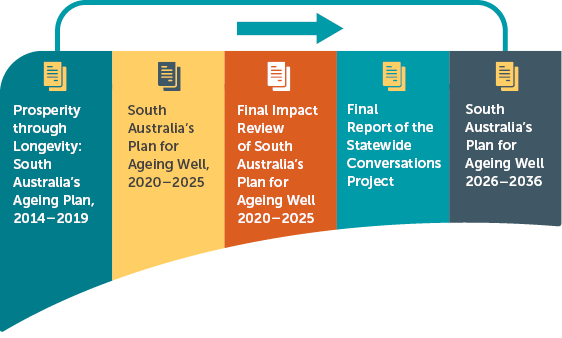
The Final Impact Review of South Australia’s Plan for Ageing Well 2020–2025 reviewed how older people were experiencing ageing across the five-year lifespan of the previous Plan. Almost 3,000 South Australians responded via a community perception survey. This impact review identified the topics for Statewide Conversations, held with older South Australians around the state.
Final Report of the Statewide Conversations Project
The Final Report of the Statewide Conversations Project involved a peer-facilitated community consultation that reached over 3 thousand South Australians, from diverse lived experience, during May to June 2025. This report also reviewed relevant state, national and international level policies.
- 3174 people were consulted.
- 2819 survey responses were received.
- 317 people attended statewide conversations
- 50+ diverse backgrounds were represented.
12 focus areas
Together, we identified 12 focus areas where the community want to see better outcomes, organised into 4 key priorities.
Priority 1 – Be safe and well
Focus areas:
- Secure and suitable housing
- Health and wellbeing
- Local support networks.
Priority 2 – Have peace of mind
Focus areas:
- Meeting basic needs
- Confidence for our future
- Planning ahead.
Priority 3 – Feel valued and visible
Focus areas:
- Accessibility
- Intergenerational connection
- Valued roles and identities.
Priority 4 – Participate in society
- Digital connection
- Economic empowerment
- Social inclusion.
Key Principles
South Australians told us this Plan should be guided by key principles:
- listening to the lived experience of older people
- promoting inclusion, equity and diversity
- safeguarding rights
- a life course approach to health and wellbeing
- action based on evidence and outcomes
- Closing the Gap.
We’re all getting older
This Plan for 2026 to 2036 covers a period in the middle of a significant demographic shift. The 2021 national Census showed the state of South Australia had the second oldest population in the nation, behind Tasmania.
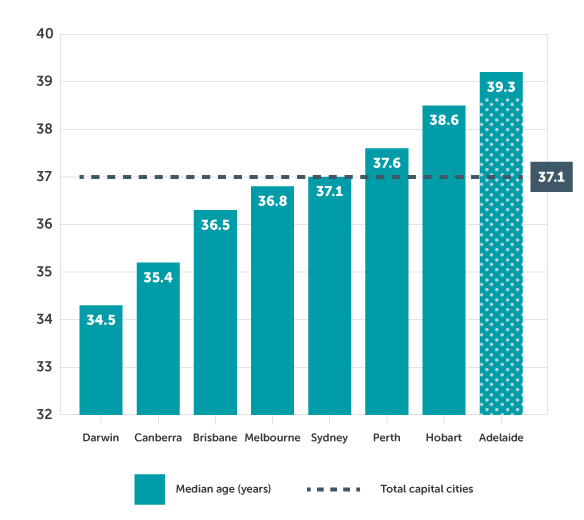
Examining capital cities, Adelaide had a median age of 39.3 while the rest of South Australia had a median age of 47 and communities in the Fleurieu and Yorke Peninsulas had medians of 60 years or above.
Graph 1: Median age by capital city. Source: ABS 2021 Census
The past century saw changes in our community makeup, as the number of people over 65 increased at a greater rate than younger age brackets. These changes accelerated from the 1960s, especially in the number of people aged over 80, which has doubled in number every 20 years. This pattern is expected to accelerate further into the 2040s and South Australia will have the single biggest increase amongst the oldest members of our community in our state’s history.
Graph 2: South Australia’s Ageing Population 1921 to 2041. Source: ABS Census (1921 to 2021)
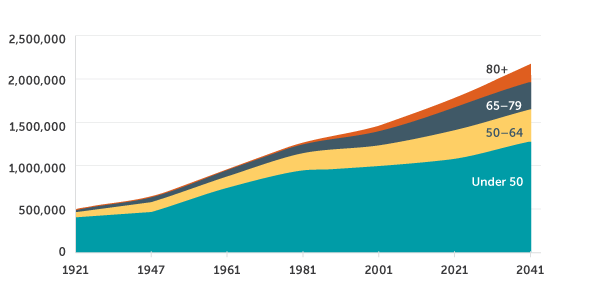
From 2021 to 2041, the state’s total population is expected to increase by around 20%. However, those aged 50 to 64 will reduce as a proportion of the population while those aged over 80 will double again. This shows the beginning of a longer-term change, well beyond the period of this Plan, when the rapid growth of older people will eventually slow. However, we will arrive at a ‘new normal’ with a much higher proportion of older people than at any point in our history.
Data Table: Population growth 2021 to 2041 by age group
Age | Population 2021 | Population 2041 | Change from 2021 to 2041: Number | Change from 2021 to 2041: Percent |
|---|---|---|---|---|
50 to 64 | 343,600 | 370,400 | 26,800 | 7.8 |
65 to 79 | 260,400 | 321,600 | 61,200 | 23.5 |
80+ | 92,00 | 192,700 | 100,700 | 109.5 |
Note: 2041 is a mid-range projection. Figures rounded to the nearest 100.
Our regional and remote areas are ageing faster
The majority (84%) of South Australians live within 100 kilometres of Adelaide, which includes the Barossa Valley, Murray Bridge and the Fleurieu Peninsula. The remaining 16% are located across the remaining 900,000 square kilometres.
While smaller in raw numbers, rural and remote areas have much higher proportions of older people, and this divide is expected to grow. The biggest growth in the total number of older people from 2021 to 2041 will be near Adelaide, but the biggest change in the composition of local communities will happen in regional and remote areas. Almost 1 in 2 people in regional areas will be aged over 50 by 2041.
Multiple regions in South Australia expect to see a doubling of people aged 80 to 84, three times as many people aged 85 to 89 and four times as many people aged over 90.
Graph 3: Regional population projections. Source: Plan SA (plan.sa.gov.au)
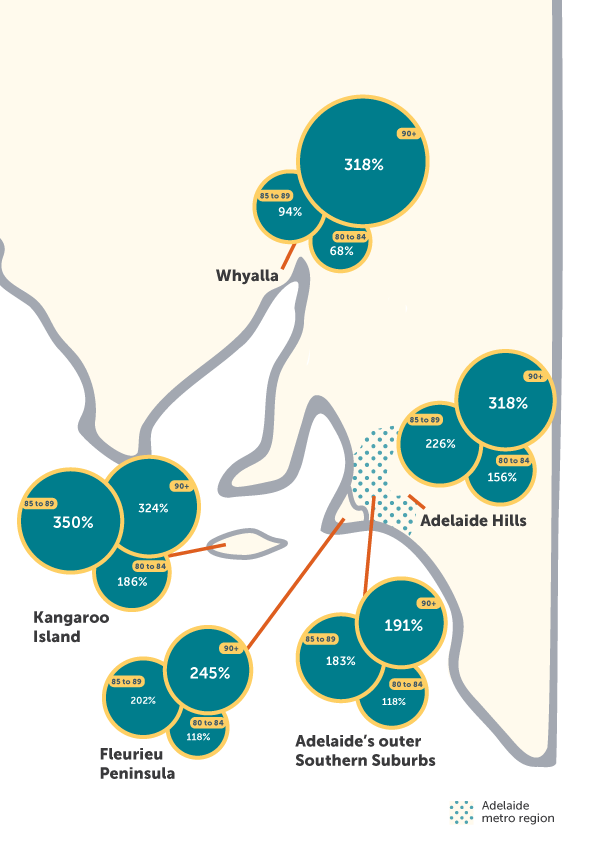
Overall, the South Australian population is expected to grow 20 per cent from 2021 to 2041.
Aboriginal people were not counted in the national Census until after the historic 1967 referendum. This past injustice makes it more challenging to track changes over time in the Aboriginal population.
However, the 2021 Census shows the amount of work needed to close the life expectancy gap. More than 21% of South Australia’s population was aged over 65 in 2021, compared to fewer than 6% of Aboriginal people, dropping even further to just over 4% in the Aṉangu Pitjantjatjara Yankunytjatjara (APY) Lands.
The average life expectancy in South Australia is now around 85 for women and 81 for men. For Aboriginal people, life expectancy is around eight years less in metropolitan areas and more than 12 years less in remote areas. Hundreds of survivors of the Stolen Generations are also now in their older years across South Australia.
Their lives were influenced by post-war migration, the social revolutions of the 1960s and 1970s including women’s liberation and new approaches to employment, childcare and contraception amongst many others. The changing choices and circumstances unique to these generations has a significant impact on their personalities and expectations today. More recent changes to how and where we work, superannuation, housing, climate and diversity have further impacted older people and their relationship to society.
Work
From 2001 to 2021, we saw more people continuing in paid employment after 65, with the rate for men almost doubling to 19% and the rate for women almost quadrupling to 11%. This includes a mix of those who choose to delay retirement beyond the pension age, and others who need employment to meet the cost of living. However, workforce participation can be negatively impacted by digital exclusion and a lack of intentional approaches to transitioning to retirement. In a tight labour market with low unemployment, older workers are making a needed contribution by producing goods and services.
Homes
Those aged over 65 currently have high levels of housing security with around 80% owning their home. However, from 2001 to 2021, the proportion of people aged 55 to 64 who had completely paid off their home almost halved, from 64% to 36%. We are seeing more people retiring with a mortgage, and an increase in the number of older people renting. Older people on low and fixed incomes face challenges accessing the private rental market in competition with the wider community. Affordable and stable rentals offered through public and community housing make up only 5% of the housing market but more than half of these properties are occupied by older tenants. Retirement villages are home to a relatively small proportion, just over 4% of South Australians aged over 55.
Climate change
A changing climate presents challenges from living in extreme heat and cold to experiencing natural disasters like flood and fire. These events have implications for housing, infrastructure, transport and health systems. There is a disproportionate impact for those with fewer private resources, those who live with disability and/or chronic conditions and those who are more susceptible to cardiovascular risks. These impacts are further compounded by language or cultural differences. South Australia has an increasingly diverse cross section of older people, who rely on fixed incomes, may be without private transport, and experience disability at over twice the rate of the general population.
Cultural diversity
Aboriginal people have lived here for tens of thousands of years. Others in our community arrived over the past two centuries for a range of economic, humanitarian and family reasons. More than 1 in 5 South Australians were born overseas with an even greater number who are children of first-generation migrants with language and cultural connections to more than 200 countries. Places like the United Kingdom and New Zealand remain amongst the biggest groups but there have been significant changes in the top countries of birth for older South Australians where English is not the primary language. In 2001, this group was dominated by migration patterns dating back to the Second World War, such as Italy, Germany, Greece, the Netherlands and Poland. By 2021, the number of older South Australians born in Italy had reduced by a third but remained the biggest. Over the same period, those born in Vietnam, China, India and the Philippines all grew into groups of older South Australians with thousands of members each. An analysis of younger groups born overseas shows that the cultural heritage of South Australians will continue to diversify.
Households and neighbourhoods
While some South Australians have always lived alone, the rate increased significantly in the 1980s and 1990s from around 18% of homes to 24% trending up to 26% in 2021. Women live longer so tend to spend more years on their own even if they have shared a home previously. Across Australia, 55% of single person households are women with half aged over 65. A rise in single older person households raises challenges: the size of the dwelling being mismatched with the person’s needs, financial pressures and less engagement with informal support networks. Many people living alone rely on animal companions for social connections and to be physically active.
Aged care
Each year, around 5% of South Australians aged over 65 access Australian Government-funded residential aged care services with a slightly higher proportion receiving home support packages. Over the coming years, more of the oldest members of the community will increasingly access these services due to the increasing number of older people in the population and rising rates of dementia. Resource shortages are already creating challenges for families and related systems like public hospitals.
Health
Longer lives are an amazing success of modern times but also mean some of us are living longer with chronic conditions, and end-of-life looks very different to past generations. As an example, data from the Australian Bureau of Statistics shows that in 2024, dementia became the leading cause of death in Australia, overtaking heart disease for the first time and up almost 40% from the previous decade. Changes like this have implications for our health system and public services as well as for our homes, streets and suburbs. We will need a greater awareness of — and capacity to respond to, support and care for — people with different behaviours and needs. Data like this also reinforces the critical importance of strategies to prevent or minimise the impact of chronic and degenerative conditions.
Human Rights
Our community has moved to provide greater protections for a range of people, through the United Nations Universal Declaration of Human Rights in 1948 and state and Commonwealth legislation regarding sex, age, race, disability and other forms of discrimination. Beyond being free from negative actions, recent changes in areas like aged care and disability support have emphasised greater agency, choice and control by individuals.
Abuse and mistreatment
Older people can find themselves more vulnerable to experiences of abuse and mistreatment. This may be due to factors like disability, decreasing capacity or increasing dependency on others. Even without any particular vulnerability, older people may experience mistreatment as a result of ageist attitudes in the community.
The Future Directions to Safeguard the Rights of Older South Australians 2023–2027 initiative sets the statewide direction to prevent, raise awareness and respond to the abuse and mistreatment of older people, including tackling ageism. The actions under this statewide strategy complement this Plan.
The South Australian Royal Commission into Domestic, Family and Sexual Violence also highlights the unique ways that older people might experience domestic family and sexual violence leading to compounded financial hardship and health impacts. The Government of South Australia has committed to significant investment over 10 years to address the immediate safety needs of survivors and lay the foundation for sustainable, long-term reform in this space. This includes adopting recommendations with specific provisions for older people.
In co-designing this Plan, South Australians identified 4 priorities that summarise their aspirations for what it looks like to live longer and live better in the next 10 years.
- Be safe and well
- Have peace of mind
- Feel valued and visible
- Participate in society.
Each priority also contains 3 focus areas where specific attention is needed to achieve better outcomes for the community and realise the priorities. Naturally, there is overlap across these areas due to the interwoven nature of factors that support or hinder ageing well.
In co-designing this Plan, South Australians identified being safe and well as a priority.
Centring our lives on safety and wellbeing depends on how our local community, or places we can get to easily, meet our needs for formal and informal supports. The life course approach recognises ageing well begins from the start of our lives and involves a strengths-based approach with outcomes shaped by social, environmental and cultural factors. The cumulative impact across our lives impacts each individual and the community we live in.
Our community’s aspiration
Our community wants better suitable and secure housing, located near services that meet our needs and preferences. Flexible options for health and wellbeing services are a key aim including new and better use of transport and technology so we can access services where we live. We want to be healthier for longer through preventive health approaches such as greater physical activity, time spent in nature and access to good nutrition. Our goal is to develop better local support networks with community hubs and peer networks so we can help each other navigate systems, access information and join activities.
Suitable and secure housing
More than 80% of retirees own their homes, but that number is shrinking. Others live in places with varying levels of security: retirement villages, residential parks, private rental, public or community housing, rooming houses, supported residential facilities and boarding with family or friends. Common to these arrangements are concerns about affordability and suitability — including accessibility and adaptability to support ageing in communities of choice. In addition to cost and universal design issues, almost 1 in 10 people over 65 have a pet and want to keep their animal companion wherever they live.
That’s my home… it needs the insides adapted, but I don’t have the affordability at the moment to put a ramp out, and there’s nowhere to help.
Work underway
- Significant land releases and infrastructure investments are increasing supply while recent changes to the construction code mean more new homes will be accessible and adaptable.
- Planning rules have changed to allow more ancillary dwellings (often referred to as ‘granny flats’), support co-housing options and expand retirement living.
- The law now recognises aged care as essential infrastructure.
- Major rental reforms passed in 2023 support longer leases and more flexibility with pets.
- Retirement village legislation passed in 2024 to provide greater consumer protection, increase transparency and to make it easier to make basic modifications like ramps and rails.
- Investment in public and community housing supports those with the greatest needs with specific projects for older people including a 50-unit development in the Adelaide CBD for single older women and an Aboriginal Elders Village in Bedford Park.
- South Australia is one of only two places in the nation with a government-owned home lender, HomeStart Finance, that specialises in helping people on low and fixed incomes.
Health and wellbeing
Older community members are key contributors to, and active users of, our public health system. Supporting their health means recognising wellbeing in its fullest sense —encompassing physical, mental, spiritual and social dimensions, not simply the absence of illness.
If you’re healthy, you know you can [age well], if you’re not healthy, you can have all the support in the world, but you’re still not really going to age particularly well.
Work underway
- Major investments have been made in new and upgraded health infrastructure and increasing our workforce of doctors, nurses, paramedics and allied health practitioners.
- Specific health services benefiting older people include telehealth options, a mobile service for aged care, the My Home Hospital program including daily visits from health staff.
- The Older Persons Assessment and Liaison Unit based at Flinders Medical Centre is a key location, with projected increases in the older population of Adelaide’s southern suburbs and the Fleurieu Peninsula.
- SA Health works closely with the Aboriginal Health Council of South Australia — the local peak body for Aboriginal Community Controlled Health Organisations, employs a Chief Aboriginal Health Officer and resources Aboriginal-specific services.
- Government and peak bodies are planning formal services and holistic community-based approaches to prevent an increase in the number of people living with dementia and better respond to their needs and preferences and those who care for them.
- The SA Health Climate Change and Health Framework 2025 to 2030 has a focus on groups who are more vulnerable to extreme weather and natural disasters.
I’m afraid that when I get older and frail that there may not be anybody there for me.
Local support networks
Age-friendly built environments and access to transport are critical to enable people to move around unassisted and safely. Noting the increasing role of technology in bridging physical gaps, location and transport remain critical factors in social connections and employment along with access to health, aged care and disability services. This is particularly so for older people in regional areas who may need to travel longer distances while facing higher transport costs and smaller local workforces that limit the availability of services. Responding to these challenges means exploring new ways for older people to connect with family, friends, services and community — in person or virtually — while reducing or delaying the impact of service-related challenges through better prevention approaches.
Informal networks — neighbours, nearby friends, a walking group or people at a community centre — can be life-changing or life-saving during transitions such as retirement, loss of loved ones, or sudden changes in capacity. With 1 in 4 people over 65 living alone, and fewer people having family close by, neighbourhood connections are more important than ever, with a protective and safeguarding effect. Loneliness and social isolation are risk factors for abuse and mistreatment, can reduce life expectancy equivalent to the effects of smoking, and contribute to health decline and crisis. By contrast, local peer networks help to foster links within communities to combat isolation, allow people to tap into informal supports and create friendships, providing support for those with smaller families who may not live nearby.
There also need to be better laws … so we don’t have to surrender our most trusted [animal] companions to secure housing.
Work underway
- Community Centres, Community Sheds and library programs are supported by the State Government and local councils to provide low-cost or no-cost options where people can make connections in their local communities.
- Since July 2022, metropolitan public transport has been free for around 430 thousand Seniors Card Members — around 85% of all South Australians aged over 60. In its first three years, this initiative saved users more than $25 million and helped people get to work, access services, see family and friends and participate in community events.
- Seniors discounts continue to apply on regional bus services.
- Community Transport SA (formerly the Community Passenger Network) has been redesigned with a greater focus on helping people in regional areas.
- The SA Taxi Subsidy Scheme provides discounts of up to 75% for people living with disability that limits their ability to use public transport.
- The Patient Assistance Transport Scheme also offers help to people who need to travel long distances for approved medical services not available locally.
In co-designing this Plan, South Australians identified having peace of mind as a priority.
We face uncertainty at every stage of life, and it often increases as we grow older. We don’t know how long savings need to last, we’re not sure when our health may change and there is less time ahead to respond to changed circumstances. It also means accessing systems we’ve never encountered before, from superannuation and Centrelink to the National Disability Insurance Scheme (NDIS) and My Aged Care. South Australians, however, report higher wellbeing at 70, than 60, highlighting the opportunities.
Our community’s aspiration
Our community wants increased security around meeting basic needs — including housing, transport, health, utilities and food — particularly as circumstances change. Another key desire is greater comfort from planning ahead for suitable housing, financial and support arrangements for older people and those who rely on them. The goal is to increase the number of people with confidence for the future and services responding to increasing diversity, using culturally safe, trauma-informed approaches that respect people’s needs and preferences.
Meeting basic needs
Around a quarter of a million older South Australians rely on income support payments including 225 thousand recipients of the Age Pension who are the biggest single group in our state concessions system. Those below pension age may rely on lower payments like JobSeeker, making it harder to meet essential needs. From 2021 to 2025, median house prices in South Australia rose 60% and median rents rose 50%. Future increases may not be as rapid, but sudden cost changes in any area can raise people’s concern about the future — especially if they live on low fixed incomes or rely on support services.
Stress builds up as you are worrying about finances when you’re trying to help your children — and grandchildren as well.
Work underway
- The Australian Government is responsible for social security (including the Age Pension), superannuation and most employment arrangements that provide people’s primary income while the State Government makes other important contributions. Concessions payments were boosted in 2024 and eligibility was expanded, including for older people who share their home with a boarder or an adult child whose income previously made them ineligible.
- Free metropolitan public transport for Seniors Card Members and a range of concessions are available for transport costs, such as driver’s licences, vehicle registration and public transport tickets.
- The Department of Human Services offers concessions including cash payments and discounts on bills.
- The Department of Human Services addresses food security through its work with organisations like FoodBank and social supermarkets, while partnerships with non-government organisations deliver financial wellbeing services.
- Initiatives like the SA Virtual Power Plant are helping to share cost savings from renewable energy.
- 430 thousand Seniors Card members can receive benefits or discounts from hundreds of businesses around South Australia.
Planning ahead
Many older people provide care and support to others, such as children, grandchildren, partners or companions. Around half of older carers live with disability themselves. They may care for a person living with dementia or financially support younger dependents. As a person’s ability to continue in the caring role changes, there are flow-on effects, like increased need for services to fill these gaps, and concerns about how their dependants’ wishes will be respected if they can no longer communicate them. Addressing this involves increased planning — through Australian Government services, Advance Care Directives, Enduring Powers of Attorney, wills and other legal documents.
Work underway
- Plan Ahead Week is supported by government and non-government organisations every year to promote the importance of wills, Advance Care Directives and Enduring Powers of Attorney.
- The Office of the Public Advocate and Public Trustee provide critical services to thousands of South Australians who are unable to make, or need support with, key decisions.
- The Australian Government is responsible for the NDIS that now offers greater options for ageing parents who care for adult children living with disability. These include support pathways for housing and support if they can no longer live with their parent(s).
- The introduction of Voluntary Assisted Dying also provides options for greater choice and dignity at end of life.
- South Australia leads the nation in people registering for organ and tissue donation.
Actually, getting on and doing stuff before you are right in the middle of it. Like doing your will before you die, getting that Advance Care Directive done while you can still make decisions for yourself, identifying and appointing an Enduring Power of Attorney to manage your money when you can’t do this anymore.
Confidence for our future
Some older people have specific experiences, needs and preferences that are not met by mainstream services: Aboriginal people including members of the Stolen Generations, the 1 in 2 people over 65 living with disability or neurodivergence, LGBTIA+ people and Forgotten Australians. While future availability of services concerns everyone, there is a need for targeted supports, training and systems to respond to our growing population diversity.
Your own mob doing the home visits — if you’re a Nunga person, you want Nunga staff.
Work underway
- The State Government engages in co-design processes for things like the State Disability Inclusion Plan, and policy and legislation are regularly made available for consultation on the YourSAy website.
- These processes are supported by Ministerial Advisory Councils for people living with disability and LGBTIA+ people along with our First Nations Voice to Parliament.
- South Australia’s first ever Autism Strategy and Autism Inclusion Charter demonstrated both good co-design and the benefits of connecting agencies across government with a focus on neurodivergence.
- The Department of Human Services funds a range of peak bodies — including COTA SA with a focus on older people — to represent and advocate for their interests.
- Various agencies offer services targeted at ensuring diversity is both respected and reflected. This includes the Department of Human Services’ Interpreting and Translating Service with over 100 language options and the dedicated Aboriginal Language Interpreting Service.
- SA Health delivers services specific to the needs of Aboriginal people, older members of the community including those who identify as LGBTIA+.
In co-designing this Plan, South Australians identified being valued and visible as a priority.
Being valued and visible can lead to respectful and productive relationships with people and organisations. It begins with taking time and making effort to engage with each other. It may result in changes to attitudes, behaviour, language, policies, systems, infrastructure, services and even laws. Critically, it opens the door for intergenerational connections that help to ensure unique identities and contributions are understood. Language matters, and we need to be conscious of how people are represented so they see and hear themselves in a positive way.
Our community’s aspiration
Our community wants better accessibility through improved use of universal design principles alongside co-design and consultation with a diverse range of older people about the places, products, services and systems they use. A key goal is better intergenerational connections that unlock the social and economic opportunities of a changing population. People have also asked for their valued roles and identities to be recognised and respected, and to be confident that ageism and other forms of discrimination will be challenged.
Accessibility
Being ‘bounced’ between organisations and finding services difficult to navigate can make people feel invisible and not valued. Using co-design and lived experience, and being open to change, can transform how products, services and systems are designed and used by people of all ages.
What matters to me is being safe and secure, acknowledged and accepted in community settings as a gay man with disabilities. Not stigmatised for being who I am and having equal rights to everyone else.
Work underway
- Our public housing system was a leader in universal housing design, adopting the silver standard of the Liveable Housing Australia Design Guidelines before they became part of the National Construction Code. The South Australian Housing Trust has committed to delivering 100 gold-standard homes during the first half of this Plan.
- Changes are underway to increase accessibility of public infrastructure and spaces and improve road safety, such as technology extending crossing time for pedestrians.
- Our public transport system is undergoing a generational change with more buses suitable for mobility devices and upgrades to train stations and tram stops to make them safer and more accessible for everyone from young children to older people with mobility challenges.
- Local councils and state agencies are now required to consult people living with disability about actions to improve access ranging from local infrastructure through to services and communications like websites.
- Consultation and co-design is becoming more common through advisory councils, engagement groups and communities of practice in a range of agencies.
If people could realise that just because you’re old, it doesn’t mean you’re not interested in things.
Intergenerational connection
Intergenerational relationships can help people to expand their horizons, swap skills and experience and leave their comfort zones. More older people in the community provides greater opportunities for cross-generational connections to flourish. Intergenerational relationships remain more usual and valued in Aboriginal communities, and also in culturally and linguistically diverse groups.
Intersectionality compounds the effects of barriers and circumstances, and needs to be factored in. For example, while disability affects about 1 in every 5 people, by the age of 65, every second person lives with disability. Some of those with disability will also be from a migrant background and an LGBTIA+ group. It’s easier to see people as separate groups but in reality each individual is as unique as the next.
Work underway
- Improving links across generations is supported by ongoing work to address ageism, led by Office for Ageing Well and a range of local governments and non-government organisations, and make events and places easier to access for people of all ages, creating more natural opportunities for people to interact and reduce attitudinal barriers.
- Intergenerational playgroups are a national initiative that respond directly to smaller and more dispersed families that make traditional intergenerational connections harder.
- The partnership between the Department of Human Services and Volunteering SA&NT began delivering the Student Volunteer Army pilot in 2024 starting with seven public high schools. Boosting volunteering amongst young people creates opportunities to work alongside older people so they learn more about each other.
Valued roles and identities
Ageism comes in many forms and is often reinforced by stereotypes or media with detrimental real-world impacts. A person’s unique individuality may diminish in the eyes of others as they grow older, with assumptions about their needs, interests and capabilities. This can manifest in critical contributions being taken for granted as grandparents, grand carers, workers, volunteers, mentors and community advocates. The lack of age-friendly and accessible environments — sometimes based on wrong assumptions about interest or need — can prevent people from fully participating in the community and break or prevent intergenerational links.
Over the coming decade, key areas for improvement will include quality and safeguarding in service delivery along with improving supported decision making for people with different levels of capacity.
Work underway
- Office for Ageing Well promotes age-friendly strategies and services that are co-designed with older people and works to tackle ageism using resources such as its Age Positive Communications Toolkit and public awareness campaigns.
- The award-winning ‘See Me for Me’ campaign from the Department of Human Services highlights the diversity and importance of people’s individual values and preferences.
- The South Australian Equal Opportunity Commission works proactively through reports and education while responding to individual complaints of discrimination under the Equal Opportunity Act 1994.
- At the national level, the Human Rights Commission works through Commonwealth legislation to combat age and disability discrimination.
- Recent law changes, such as South Australia’s Conversion Practices Prohibition Act 2024, send a strong message that people’s most personal traits and preferences must be respected.
In co-designing this Plan, South Australians highlighted participating in society as a priority.
Participation at any age depends on having the skills, confidence and opportunities to contribute meaningfully which can bring identity, purpose, and wellbeing. This can happen through work, volunteering, involvement in local clubs and organisations or attending social and community events. Every form of participation combats isolation but digital exclusion, cost-of-living pressures and barriers to transport or local infrastructure may limit people’s participation.
Our community’s aspiration
Older people want economic empowerment with their abilities valued, opportunities to learn new skills, and flexible work options that recognise the importance of caring and other responsibilities. More people want to see social inclusion through diverse volunteering opportunities, community programs, cultural and sporting activities and in family events — in families, both biological and of choice. A key goal is ensuring digital connection in ways that matter to them, like being confident about online safety, and able to take advantage of technology to overcome barriers such as language, disability and distance.
One of the biggest challenges as I get older is the lack of one-on-one personal conversation in the business world… going from a situation where you’ve got fairly close communication and have to use those skills all the time to not seeing anyone.
Economic empowerment
Older people are a key part of the economy, holding senior roles, running businesses, supporting working parents by caring for grandchildren and driving demand for goods and services. This contribution needs to be recognised and valued so we can make the most of it now and even more so as our population ages.
There is huge potential for employment and welfare systems to better connect older people with, and support them to remain in, paid employment for as long as they choose to. Improvements can be driven by flexible work arrangements to make it easier for people — including those receiving the Age Pension — to work part-time or fulfil caring responsibilities. We also have significant opportunities to better apply the expertise of mature workers while using education and re-entry programs to address skills shortages and foster entrepreneurship.
Work underway
- The Office of the Commissioner for Public Sector Employment released its Diversity, Equity and Inclusion Strategy in late 2023 that seeks to better recognise and harness the skills of a range of groups traditionally on the margins of the workforce.
- Private and public employers have made significant improvements in flexible work arrangements that respond to personal circumstances ranging from caring responsibilities to mobility challenges and where people live. These include remote working, flexible or part-time hours and transition to retirement arrangements.
Social inclusion
Social inclusion ranges from attending community events to volunteering and involvement with community centres, local councils, sporting clubs and other organisations. The consultation found the volunteering rate for older South Australians was almost 19% — above the national average (15%) but well below levels from a decade ago — almost 22% in 2016. Factors such as cost of living pressures, impacts of COVID-19 and compliance processes have contributed to this decline. Organisations will be able to benefit from the increase in the older population if they make it easier for them to join, contribute, connect, earn, and learn.
I am transitioning well from retirement to ageing well. I continue to fully embrace life well. I am very lucky to be fully engaged in volunteering.
Work underway
- The State Government supports volunteering by providing free police checks and screenings for those in child-related settings, aged care and disability services.
- Volunteering SA&NT provides a range of resources, programs and awards for those who wish to volunteer, organisations seeking to engage volunteers and information about spontaneous and short-term volunteering.
- Organisations like the Country Fire Service (celebrating its 50th year of formal operations in 2026) and State Emergency Service are among the biggest volunteer organisations in the state and deliver critical support to the community. Both organisations also provide great opportunities for people from their late teens to their 60s and 70s to interact, work together and learn from each other.
- Initiatives like free metropolitan public transport for Seniors Card Members, Seniors Card partnerships and ongoing funding for community centres and other community hubs are helping people overcome transport and cost barriers to get out of their homes and into the community.
- Ongoing support for sporting events and musical and cultural festivals — from local multicultural celebrations to Pride events and the Adelaide Fringe — provide a range of opportunities for people with different interests to come together and celebrate the diversity in our community.
Digital connection
The digital era has transformed how we communicate, shop, access services and find information while assistive technology is helping people to overcome mobility, communication and other barriers. Technology comes with costs, risks, complexity and rapid change that can present greater challenges to those with limited financial and social resources or who experience cognitive impairments. Dedicated digital programs can help to overcome challenges along with incidental learning through work, community programs and social interactions.
It’s so hard to be out job seeking as you seem overqualified for the sort of role you actually want at that stage of life.
Work underway
- Governments support a range of digital literacy programs and the Department of Human Services awarded $325 thousand in grants in 2025 to 24 community organisations to boost access to digital technology and skills.
- TAFE SA has released a free online course for community members to better understand artificial intelligence as it increasingly becomes part of our lives.
- The South Australian Government’s Consumer and Business Services provides a range of information and advice about consumer rights, as more people shop online.
- The Australian Government runs the Scamwatch program to boost awareness of online dangers.
- Digital inclusion is reflected in the numbers of older people remaining in the workforce, which enables them to remain familiar with changing systems and hardware.
South Australia’s Office for Ageing Well — established under the Ageing and Adult Safeguarding Act 1995 — has been a key driver for age-focused policies and services. This includes regulating retirement villages, fighting ageism and supporting the Adult Safeguarding Unit that covers adults at risk of, or experiencing, abuse or mistreatment. All agencies and organisations have an obligation to consider the needs of their older employees, volunteers, customers and clients to build a fairer, inclusive and more productive community.
Responding to older people’s needs and preferences, while ensuring others in the community are also well-served, requires consideration by various stakeholders. State governments take the lead in public health services, planning, social housing and transport while the Australian Government manages pensions, superannuation, aged care, the NDIS and Medicare. Local councils are involved in everything from streets, parks and libraries to a range of local services. Philanthropy, community organisations and businesses also design and deliver supports, products and services. Some areas overlap and decisions can have ripple effects so it’s important to listen to lived experience, coordinate actions wherever possible and remain conscious that individuals as well as governments must adapt to changing circumstances.
Decisions by individuals are based on a balance of choice and need. Decisions by governments involve making rules that help people make better choices and directing public resources where they respond to greatest need.
1843
Maintenance Act (SA) imposed a responsibility on families to support family members without government responsibility.
Responsibility: Government of South Australia
1856
Destitute Asylum opens and “Outdoor Relief” begins.
Responsibility: Government of South Australia
1909
Age Pension introduced.
Responsibility: Australian Government
1918
Destitute Asylum closes (linked to pension introduction).
Responsibility: Government of South Australia
1921
Population over 50 was 81,800 (17%)
1940
Aged and Infirm Person’s Property Act.
Responsibility: Government of South Australia
1947
Population over 50 was 159,300 (25%)
1954
Public housing cottage flats program starts for older single women.
Responsibility: Government of South Australia
1961
Population over 50 was 211,100 (22%)
1967
Aboriginal people counted in the census for the first time.
Responsibility: Australian Government
1975
Medibank starts as Australia's first universal healthcare system (known as Medicare from 1984).
Responsibility: Australian Government
1981
Population over 50 was 329,800 (26%)
1984
Sex Discrimination Act.
Responsibility: Australian Government
1993
Compulsory Superannuation.
Responsibility: Australian Government
1995
Ageing and Adult Safeguarding Act establishes the Office for Ageing Well.
Responsibility: Government of South Australia
1997
Aged Care Act.
Responsibility: Australian Government
2001
Population over 50 was 454,400 (31%)
2004
Age Discrimination Act.
Responsibility: Australian Government
2013
Longevity Revolution Report (Dr Alexandre Kalache, Adelaide Thinker in Residence).
My Aged Care and NDIS commence.
Responsibility: Australian Government
2014
Prosperity through Longevity: South Australian’s Ageing Plan, 2014–2019.
Responsibility: Government of South Australia
2019
Adult Safeguarding Unit opens through significant updates to the Ageing and Adult Safeguarding Act.
Responsibility: Government of South Australia
2020
South Australia’s Plan for Ageing Well, 2020–2025.
Responsibility: Government of South Australia
2021
Population over 50 was 698,400 (39%)
Voluntary Assisted Dying Act.
Responsibility: Government of South Australia
2022
Free 24/7 metropolitan public transport for Seniors Card Members.
Responsibility: Government of South Australia
2024
Aged Care Act 2024.
Responsibility: Australian Government
2041 (projected)
Population over 50 likely to be 884,800 (40.7%)
The next steps will continue to involve collaboration between 3 levels of governments, a range of organisations across our community and older people in South Australia. Office for Ageing Well will coordinate and commence a 5-year action plan for 2026 to 2031 that will enable progress toward our aspirations. The action plan will be reviewed halfway through and then again at the end of the 5 years, before we repeat the process for 2031 to 2036.
We will also develop an evaluation framework with a range of indicators to help us track progress and understand the experiences of older people. In addition to data, case studies and individual stories will be important to show the people and places behind the numbers.
Working differently together
This is the latest in a series of state government plans for ageing well in South Australia. These plans have created a focus on this policy area and built connections between the community, different levels of government and a range of organisations. Building on these earlier efforts, a key focus for the coming decade is to consider how we work together in addition to what work we do in response to the record increase in older members of our community during the life of this Plan.
There is an interrelationship between multiple products, policies and programs where responsibility and accountability may have gaps, be unclear or overlap. This means collaborating is critical to finding the best solution.
A current example is the relationship between housing, health and aged care. Each system is critical for older people but a small barrier or change in one area can quickly become a big challenge in another. It’s also an example where all three levels of government, the not-for-profit sector, commercial businesses, families and individuals play important roles.
Another example is considering how government supports or commissions peak bodies, research and advocacy that influence how policies are developed and implemented in our community across the public and private sectors.
Principles for working together
Working together should be guided by a set of shared principles. South Australians told us these should include listening to the lived experience of older people while promoting inclusion, equity and diversity. Our community wanted their rights safeguarded and a life course approach to health and wellbeing with action to be based on evidence and outcomes. When working together, it’s vital that governments, organisations and local communities embrace the principle of enabling leadership by individuals and communities.
Creating actions
- We are inviting collaboration on the development of actions to meet the needs outlined in this Plan. A starting point for creating these actions could include:
- Conduct a review of work already being progressed in different priority areas to see whether it should be continued or repurposed to meet changing community needs.
- Evaluate ways of working, as well as actions, so that change is enabled.
- Use the World Health Organization’s eight interconnected domains that contribute to age-friendly communities to provide guidance for further improvements. Importantly, we have an opportunity to deliver individual actions with benefits across multiple areas:
- Community and healthcare
- Transportation
- Housing
- Social Participation
- Outdoor Spaces and Buildings
- Respect and Social Inclusion
- Civic Participation and Employment
- Communications and Information.
- Consider ways to boost connections over back fences and along our streets to support social inclusion, informal support networks and community resilience.
- Look at ways to get more people more active and spending time in nature for better preventive health for chronic and degenerative conditions including dementia.
- Consider how rapidly-changing technology presents both a challenge and an opportunity to overcome barriers that could otherwise impact access to services and the workforce.
- Consider innovative approaches to demand-driven service systems like aged care and the NDIS — particularly in regional areas with approved but unused funding — to provide new employment opportunities, support local economies and help people age in place.
- Consider how better training, communication and supports can improve mainstream services to better consider and cater to the increasing diversity of our older people.
- Look at the best way to work with private businesses on product and service design to deliver tailored and accessible options for older people and help them tap into the growing market of older consumers.
- Consider new approaches to rights and safeguarding that meet changing community expectations as the number of older people increases.
- Look at the range of supports available from governments, community organisations and philanthropy to consider how these can be better targeted to those in greatest need and have the biggest impact.
- Strengthening informal networks that boost community resilience, particularly in areas with a high concentration of older people.
- Increasing community awareness of the nature and impacts of domestic, family and sexual violence for older people and empowering people to respond to and prevent that violence. Ensuring help-seeking pathways are accessible to older people. (Royal Commission into Family, Domestic and Sexual Violence, recommendations 31 and 50).
The priorities and focus areas in this Plan are linked to other ongoing research and work by the South Australian Government, including:
Transport
South Australia’s Transport Strategy 2025 and South Australia’s Road Safety Strategy to 2031 are planning for a population of more than two million, with a higher proportion of older people, who need to connect with each other and move safely in our communities.
South Australia’s Transport Strategy 2025
South Australia’s Road Safety Strategy to 2031
Housing
The Greater Adelaide Regional Plan and South Australian Housing Roadmap set out planning priorities for 30 years to manage a higher population and more than 300,000 new homes.
Greater Adelaide Regional Plan
South Australian Housing Roadmap
Closing the Gap
South Australia’s Closing the Gap Implementation Plan 2024–26 focuses on improving outcomes for Aboriginal people across a range of areas.
South Australia’s Closing the Gap Implementation Plan 2024–2026
Public health
The South Australian State Public Health Plan identifies older people as a priority population for public health planning due to prevalence and risk of disability, dementia and chronic conditions that can increase in severity with age.
South Australian State Public Health Plan
Safeguarding rights
The Future Directions to Safeguard the Rights of Older South Australians 2023–2027 sets statewide priorities to protect rights, tackle ageism, and prevent abuse, emphasising coordinated partnerships and a comprehensive approach to support older South Australians.
Future Directions to Safeguard the Rights of Older South Australians 2023–2027
Economy
South Australian Economic Statement and draft South Australian Social Statement seek to make South Australia smart, sustainable and inclusive by boosting productivity and wellbeing while ensuring progress benefits the whole community.
South Australian Economic Statement
Research
Strategic Research Agenda for Ageing Well guides research on social and structural factors affecting ageing. Created with input from over 100 experts, its goals are to provide useful evidence for policy, improve research funding efficiency, and ensure research meets community needs.
Office for Ageing Well coordinates this Plan within State Government, but it’s a roadmap for the whole state and something everyone can contribute to, including:
- businesses
- local councils
- community groups
- service organisations
- sporting clubs
- cultural clubs.
If your organisation is working to help our community live longer and live better, then we’d love to hear about it, as these case studies help us measure progress.
While there will be formal processes to contribute to the action plans and evaluation framework, you are welcome to share your thoughts about this plan, potential actions and useful indicators.
Email us at officeforageingwell@sa.gov.au.
Aboriginal peoples
Refers to Aboriginal and Torres Strait Islander peoples within South Australia. We acknowledge and respect this preference of the South Australian Aboriginal community in written and spoken language. This is not intended to exclude Torres Strait Islander people, or people who may identify as being of both Aboriginal and Torres Strait Islander descent.
Aboriginal Community Controlled Organisations
Organisations that are controlled and operated by Aboriginal people reflecting the right to self-determination. They are designed to provide services that are culturally appropriate and community driven, ensuring the needs and aspirations of Aboriginal communities are met effectively.
Abuse (and mistreatment)
An act or series of acts, including a failure to take appropriate action, occurring within a relationship of trust, dependency or imbalance of power, that causes harm to a relevant adult. Abuse may include one or more of the following: financial, physical, psychological or emotional, sexual, neglect and social.
Ageing well
A positive view of ageing, health and wellbeing, recognising ageing as a lifelong, normal experience for everyone rather than limited to those who are termed ‘old’.
Ageism
Stereotypes, prejudice and discrimination towards others or oneself based on age. Ageism can be found in institutions, between people and within us.
Age in place
The ability for people as they age to live in an appropriate home and community, that accommodates changes in needs and function, rather than moving into residential care.
Age-friendly
Age-friendly cities and communities enable people to age actively by maximising opportunities for health, participation and security for quality of life as people grow older.
Ancillary dwelling (granny flat)
Historically also known as a ‘granny flat’, this is accommodation located on the same allotment as an existing dwelling with no more than 2 bedrooms.
Carers
People who provide ongoing paid and unpaid support to family/friends with disability, chronic illness or frailty.
Cost of living
Daily costs such as housing, food, taxes, healthcare and transport, which can vary significantly by location.
Disability
Includes physical, sensory, cognitive, intellectual, psychosocial and invisible disability. It is diverse and experienced by people of all ages, backgrounds and cultures. Both the social and human rights models of disability recognise that disability is not caused by an individual’s impairment, but by the physical, attitudinal and systemic barriers created by society.
Diversity
Any dimension that can be used to differentiate groups and people from one another. It empowers people by respecting and appreciating what makes them different.
Domestic, family and sexual violence
Encompasses a wide range of behaviours that result in physical, sexual, emotional and psychological harm. This type of violence often occurs within a domestic setting but can also occur in public or between 2 people who do not live together.
Forgotten Australians
The 500 thousand children placed into institutional and out-of-home care in Australia up to the end of 1989. Of this group, 7 thousand were child migrants, 50 thousand were children from the Stolen Generations and over 440 thousand were non-Indigenous children.
Inclusion
Intentional, ongoing effort to ensure all people can fully participate in all aspects of life.
Intersectionality
The combination of age, sexual orientation, care-giving responsibilities, ability, class, ethnicity, and gender identity in forming diverse identities.
LGBTIA+ or LGBTI+
The preferred terms when referring to older people, due to ‘queer’ being a common homophobic slur when younger.
Life course approach
Acknowledges that healthy ageing in later life is shaped by experiences across the entire lifespan, beginning in utero. It takes into account the combination of biological, behavioural, social, environmental and cultural factors influences health and wellbeing throughout all life stages.
Local councils
A system of government in South Australia under which elected local government bodies (councils) are constituted under the Local Government Act 1999 (SA).
Loneliness
The gap between desired and actual social relationships, characterised by feelings of isolation, lack of companionship and distress — even when surrounded by others.
Preventive health
A systems-based approach to preventing health challenges that addresses the wider determinants of health, reduces health inequities and decreases the overall burden of disease. Actions to address potential health and social challenges include health promotion, early interventions, housing support, food security initiatives, education and community-led advocacy.
Public and community housing
Rental homes for people on low incomes. Public housing is managed by SA Housing Trust and community housing is delivered by community organisations.
Safeguarding
An action that a person, organisation or community takes to promote and protect the health, wellbeing and human rights of a person to live free from abuse or mistreatment.
Social isolation
Absence of relationships with other people.
Trauma-informed approaches
Integrates knowledge about the widespread impacts of trauma into practice, with the aim to avoid re-traumatisation.
Wellbeing
Satisfaction with life, fulfilment, positive function, presence of positive emotions and absence of negative emotions.
Australian Bureau of Statistics (2021) Census of Population and Housing, ABS website.
Australian Bureau of Statistics (December 2024) Quarterly estimated resident population (ERP): National, state and territory population. ABS website.
Australian Government (16 November 2022) National apology to Forgotten Australians and former child migrants: 13th anniversary commemoration.
Australian Institute of Health and Welfare (2021) Older Australians: Culturally and linguistically diverse people, Australian Government.
Australian Institute of Health and Welfare (02 July 2024) Older Australians, Australian Government.
Department of Health, Disability and Ageing (8 October 2025) Aged care data snapshot 2025, Australian Government.
Department of the Premier and Cabinet (October 2021) South Australian multicultural highlights, Government of South Australia.
Department of Human Services (2023) Future directions to safeguard the rights of older South Australians 2023–2027, Government of South Australia.
Department of the Premier and Cabinet (2013) The longevity revolution: Creating a society for all ages, report prepared by Alexandre Kalache, Adelaide Thinker in Residence 2012–2013, Government of South Australia.
Department of the Premier and Cabinet (December 2025) Building safer futures: South Australia's whole-of-government response to the Royal Commission into Domestic, Family and Sexual Violence, Government of South Australia.
Department of Treasury and Finance (October 2025) Labour Force, Government of South Australia.
Georgeou, N., Schismenos, S., Wali, N., Mackay, K., & Moraitakis, E. (2023) ‘A Scoping Review of Aging Experiences Among Culturally and Linguistically Diverse People in Australia: Toward Better Aging Policy and Cultural Well-Being for Migrant and Refugee Adults’, The Gerontologist, 63(1):182–199, doi: 10.1093/geront/gnab191
Laß I, Botha F, Peyton K and Wilkins R (2025) The Household, Income and Labour Dynamics in Australia Survey: Selected Findings from Waves 1 to 21. Melbourne Institute: Applied Economic and Social Research, the University of Melbourne.
Plan SA (2023) Population projections, Plan SA website.
Preventive Health (2025) South Australian population health survey 2024–25, Government of South Australia.
Resilient Ready (October 2025) National social capital and social infrastructure measurement framework, prepared by Hanvin R, Aldrich D and Reyes V, Resilient Ready.
SA Health (2023) Future Directions to Safeguard the Rights of Older South Australians 2023–2027, Government of South Australia.
SA Health (2025) Climate Change and Health Framework 2025–2030, Government of South Australia.
Stott Despoja N (14 August 2025) Royal Commission into Domestic, Family and Sexual Violence Report South Australia, report to Government of South Australia.
The Commonwealth (2024) Ageing Well in the Commonwealth: a roadmap for healthy ageing across the life course, Commonwealth Secretariat, London.
Treasury (August 24 2023) 2023 Intergenerational report: Australia’s future to 2063, Australian Government.
Uniting Communities (August 2025) Loneliness by Numbers: A South Australian snapshot.
World Health Organization (2017). The WHO Age-friendly Cities Framework. World Health Organization.
Zagler J, Bevan J, Parrella A, Morey K, Digenis C, and Pearson O, in collaboration with the Ageing Well Roadmap Project Steering Committee (2025) Aboriginal Ageing Well Research Priorities, Wardliparingga Aboriginal Health Equity, South Australian Health and Medical Research Institute.
Median age by capital city (Graph 1)
Capital city | Median age of residents in this city |
|---|---|
Darwin | 34.5 |
Canberra | 35.4 |
Brisbane | 36.5 |
Melbourne | 36.8 |
Sydney | 37.1 |
Median age for all Australian capital cities | 37.1 |
Perth | 37.6 |
Hobart | 38.6 |
Adelaide | 39.3 |
Source: ABS 2021 Census
South Australia’s Ageing Population 1921 to 2041 (Graph 2)
Year | Population | People 50+ | People 50+ as % | People 65+ | People 65+ as % | People 80+ | People 80+ as % |
|---|---|---|---|---|---|---|---|
1921 | 493,900 | 81,800 | 16.5 | 25,200 | 5.1 | 3,200 | 0.6 |
1947 | 642,600 | 159,300 | 24.8 | 56,000 | 8.7 | 8,300 | 1.3 |
1961 | 969,300 | 211,100 | 21.8 | 84,900 | 8.8 | 12,500 | 1.3 |
1981 | 1,285,000 | 329,800 | 25.7 | 134,900 | 10.5 | 24,500 | 1.9 |
2001 | 1,458,900 | 454,400 | 31.1 | 211,400 | 14.5 | 55,500 | 3.8 |
2021 | 1,781,500 | 698,400 | 39.2 | 356,300 | 20.0 | 93,000 | 5.2 |
2041 | 2,174,500 | 884,800 | 40.7 | 514,400 | 23.7 | 192,800 | 8.9 |
Source: ABS Census (1921 to 2021).
Data Table: Population growth 2021 to 2041 by age group
Age | Population 2021 | Population 2041 | Change from 2021 to 2041: Number | Change from 2021 to 2041: % |
|---|---|---|---|---|
50–64 | 343,600 | 370,400 | 26,800 | 7.8 |
65–79 | 260,400 | 321,600 | 61,200 | 23.5 |
80+ | 92,00 | 192,700 | 100,700 | 109.5 |
Figures rounded to closest 100. 2041 is a mid-range projection.
Regional population projections (Graph 3)
Overall, the population is expected to grow 20 per cent from 2021 to 2041 but major variances include:
- A reduction in the number of people aged 50 to 64 in country areas of around 6 per cent
- An increase in the number of people aged 80 and over in specific metropolitan and country areas.
Area | Increase in people aged 80 to 84 in % | Increase in people aged 85 to 89 in % | Increase in people aged 90+ in % |
|---|---|---|---|
Adelaide southern suburbs | 118 | 183 | 191 |
Adelaide Hills | 156 | 226 | 318 |
Fleurieu Peninsula | 118 | 202 | 245 |
Kangaroo Island | 186 | 350 | 324 |
Whyalla | No data | No data | 318 |
Source: Plan SA (plan.sa.gov.au)